- What Are Salvadoran Restaurants?
- Typical Dishes You'll Find in a Salvadoran Restaurant
- How to Find Salvadoran Restaurants Near You
- Popular Salvadoran Restaurants in the United States
- Salvadoran Restaurants in El Salvador You Must Visit
- How to Tour the Best Salvadoran Restaurants
- Tips for Choosing a Good Salvadoran Restaurant
- Frequently Asked Questions About Salvadoran Restaurants
- Explore Salvadoran Gastronomy
Craving freshly made pupusas, crispy fried yucca, or a chicken-stuffed bread sandwich that melts in your mouth? Salvadoran food has conquered palates far beyond the borders of this small Central American country. Thanks to a vibrant diaspora and growing interest in authentic Latin cuisine, Salvadoran restaurants have multiplied across the United States, bringing with them the flavor of tradition, corn, and home.
In this article, we’ll take you on a complete journey through the universe of Salvadoran restaurants. You’ll discover what makes them special, which dishes you can’t miss, where to find the best spots in key U.S. cities and El Salvador, and how to plan your own foodie road trip. Get ready for a flavor journey that will connect you with the most authentic essence of El Salvador.
What Are Salvadoran Restaurants?
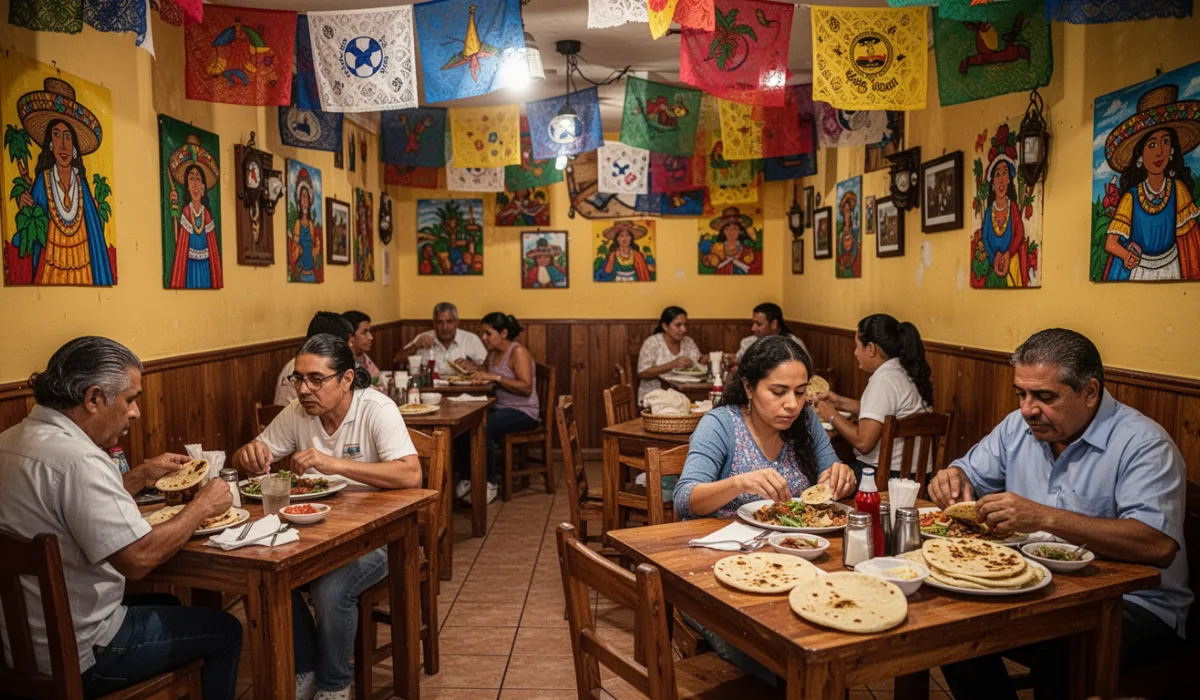
Salvadoran restaurants are much more than simple places where food is served. They are cultural ambassadors that transport diners directly to the heart of Central America through their flavors, aromas, and warmth.
Type of Food They Offer
The gastronomic offering of these restaurants is based on Salvadoran mestizo cuisine, a fusion of indigenous heritage (mainly Pipil, Maya, and Lenca) and Spanish tradition . You’ll find everything from ubiquitous corn-based dishes to comforting soups, stewed meats, and fresh seafood in coastal areas.
The reigning ingredient is, without a doubt, corn, which has been the foundation of Mesoamerican diets for millennia . Through the process of nixtamalization (cooking corn with lime), the dough (masa) that gives life to pupusas, tamales, atoles, and tortillas is obtained. Alongside corn, red beans and ayote (squash) form the sacred trilogy of the milpa .
Family Atmosphere
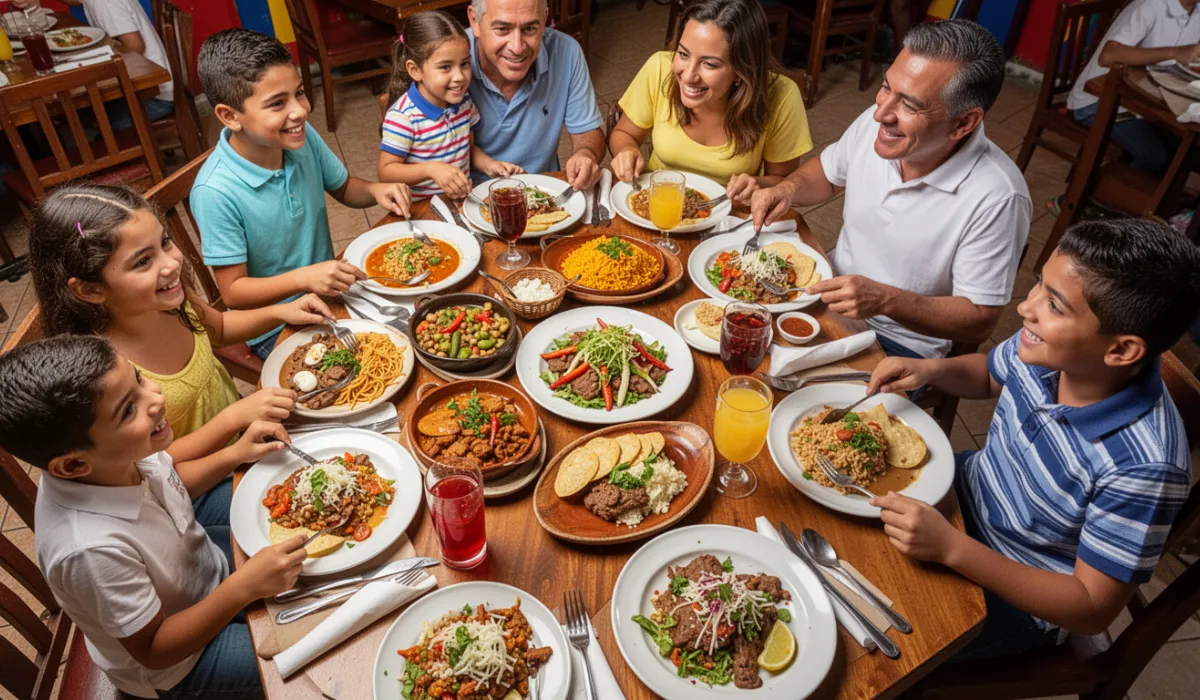
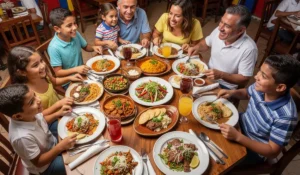
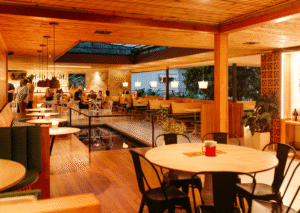
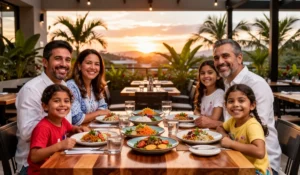
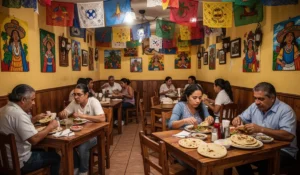
A distinctive characteristic of Salvadoran restaurants is their cozy, family-friendly atmosphere. They are usually family-run businesses, where recipes have been passed down through generations. It’s not uncommon to find the grandmother in the kitchen supervising the dough or the children serving tables with a genuine smile. The decor often includes handicrafts, volcanic landscapes, and typical music, creating a space where Salvadorans living abroad feel at home and visitors discover a new culture.
Cultural Influence
Salvadoran gastronomy doesn’t exist in a vacuum. Throughout history, it has received notable influences. With the arrival of the Spanish, pork, beef, and chicken were incorporated; dairy products like cheese and cream; rice, wheat, and sugarcane . Later, Arab immigrants brought new uses for ingredients like eggplant . Today, Salvadoran cuisine continues to evolve, with a new generation of chefs reinterpreting traditional flavors through fine dining, as we’ll see later .
Typical Dishes You’ll Find in a Salvadoran Restaurant
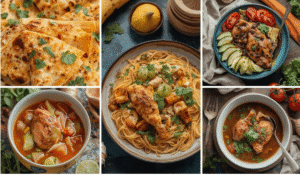
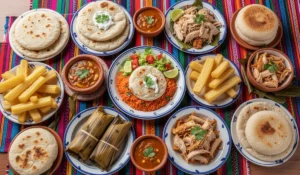
If it’s your first time in a Salvadoran restaurant, the menu variety can be overwhelming. Here are the most emblematic dishes you can’t miss, with detailed descriptions so you know what to expect.
Pupusas: The Soul of El Salvador
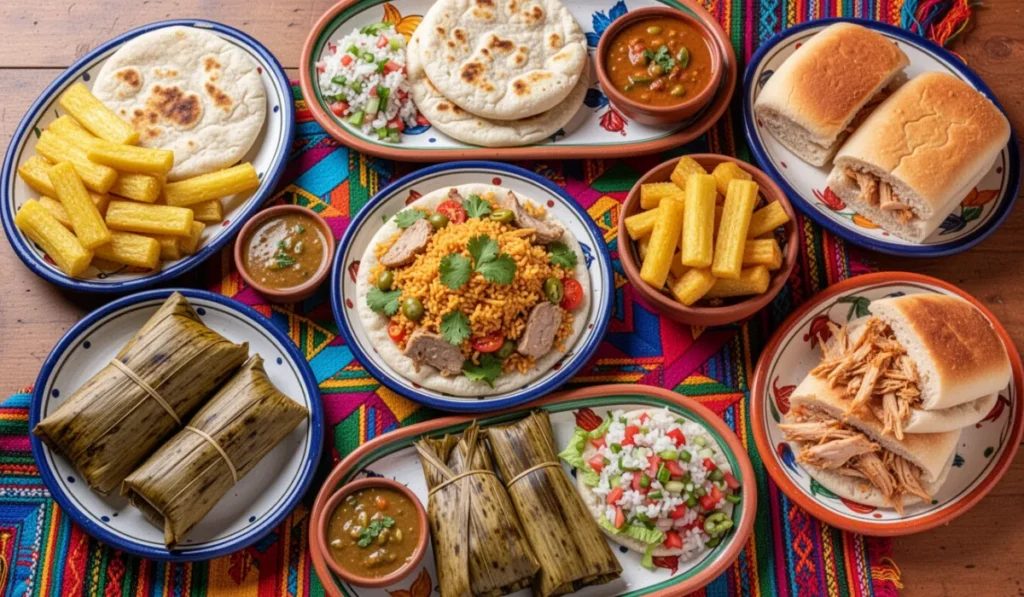
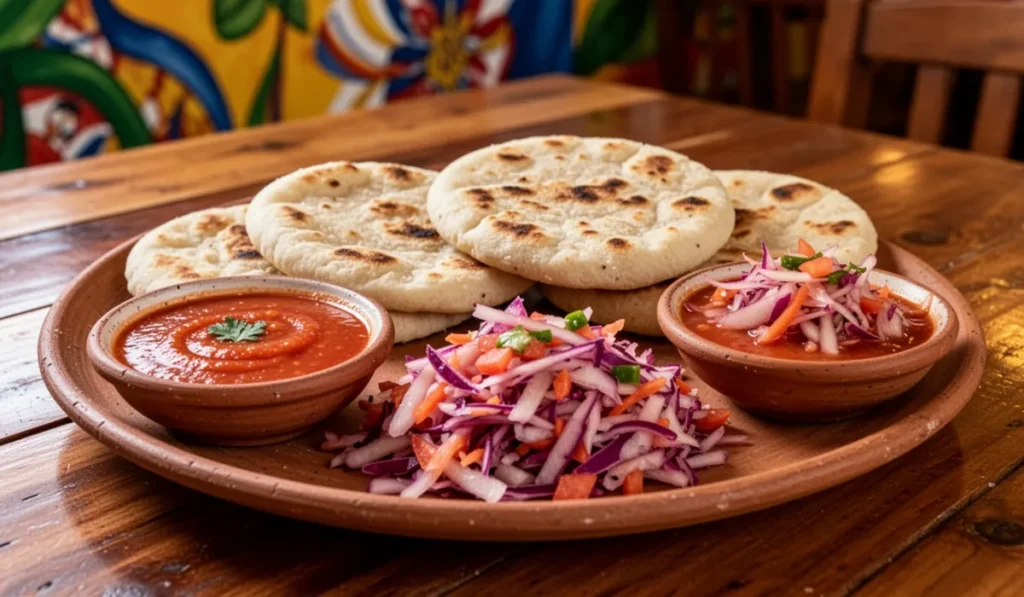
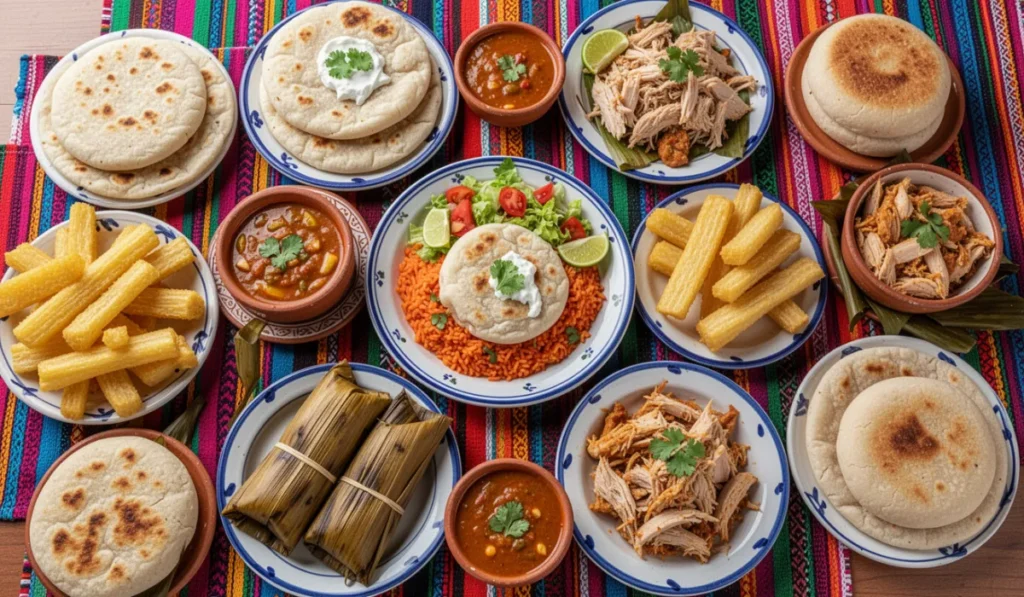
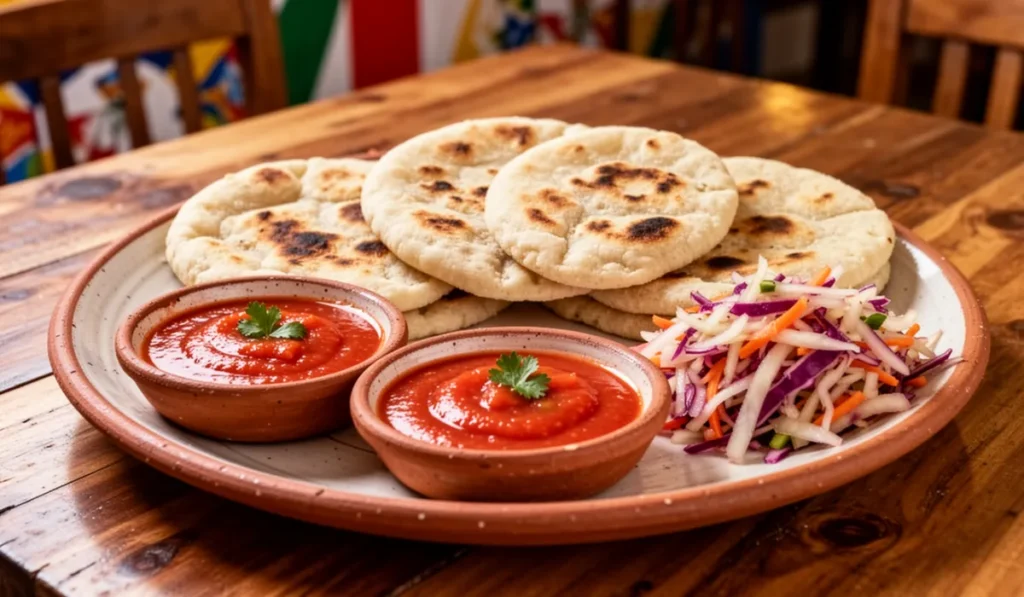
Declared Intangible Cultural Heritage of Humanity by UNESCO and the national dish par excellence, pupusas are the main reason many people seek out Salvadoran restaurants . They are a thick, handmade corn tortilla (or, in the Olocuilta region, rice) stuffed with various ingredients and cooked on a comal (griddle) until the outside is lightly golden and the inside is melted and juicy.
The most popular varieties are:
- Revueltas (Mixed): The reigning combination. It contains cheese, refried beans, and chicharrón (ground, seasoned pork) .
- Queso con loroco (Cheese with loroco): A classic that highlights the unique flavor of loroco, an edible flower native to the area with a floral and herbaceous aroma found only in Central America .
- De chicharrón (Pork): Ground pork with an intense, spicy flavor.
- De frijol con queso (Bean and cheese): A delicious and often vegetarian option.
Pupusas are always served with two essential accompaniments: curtido (a fermented cabbage and carrot slaw with vinegar, oregano, and chili) and a fresh, lightly cooked tomato sauce .
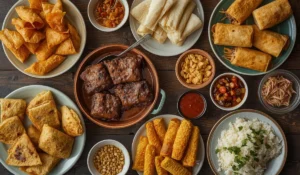
Fried Yucca with Chicharrón
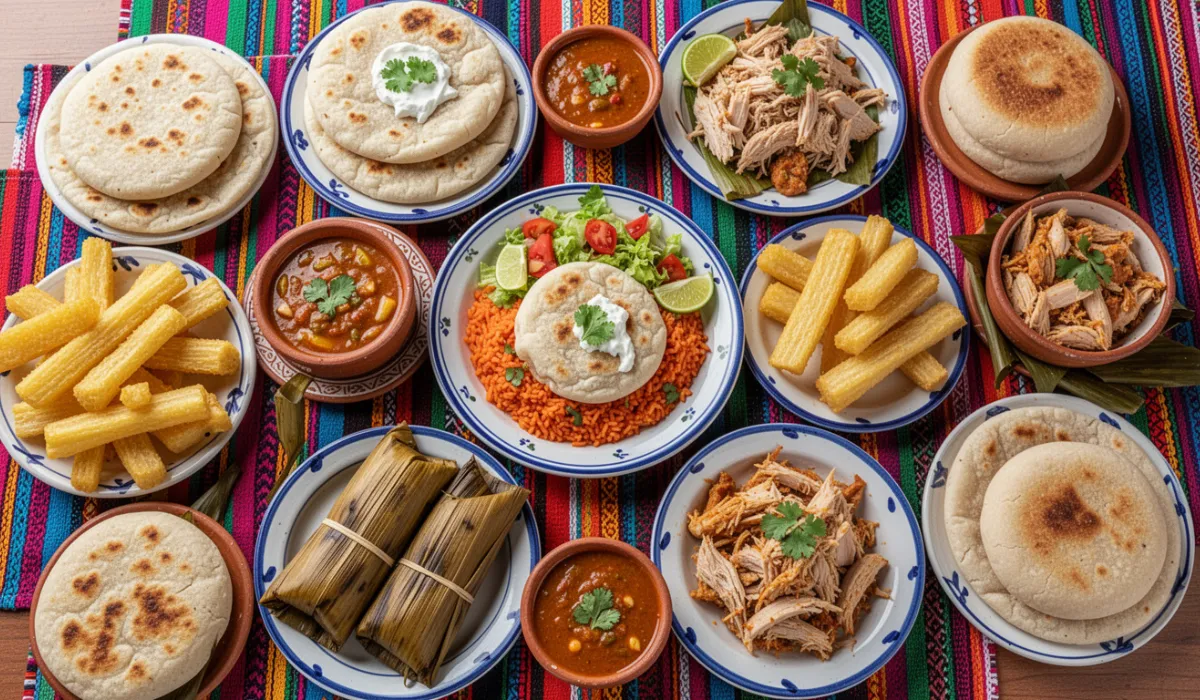
This dish is a hearty street-side lunch that has earned its place on all restaurant menus. Yucca (cassava) is fried until golden and crispy on the outside, but soft and tender on the inside. It’s served with generous pieces of crispy pork chicharrón and accompanied by curtido or chimol (a fresh salsa of tomato, onion, and cilantro) that helps balance the richness of the fried food .
Stuffed Bread with Chicken (or Turkey)
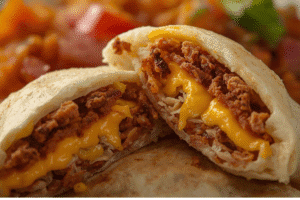
The typical Salvadoran sandwich, also known as “pan con pavo” (turkey) or “pan con gallina” (hen). It consists of a soft French bread roll stuffed with shredded chicken or turkey that has been cooked in a flavorful tomato stew with spices. It’s served with a heap of pickled cabbage, radish, and cucumber, and sometimes a slightly spicy sauce. It’s a festive dish, traditional during the Christmas season but available year-round in restaurants .
Salvadoran Tamales
Salvadoran tamales have a unique personality that distinguishes them from the rest of Central America: they are steamed wrapped in plantain leaves, giving them an unmistakable aroma and flavor . The corn dough is soft and moist. There are several versions:
- Tamal de gallina/pollo (Chicken tamale): The most common, filled with a chicken stew with olives, capers, and vegetables .
- Tamal pisque: A simpler version where the dough is mixed with whole black beans. It’s delicious with Salvadoran cream .
- Tamal de elote (Sweet corn tamale): Made with ground tender corn, it has a sweet flavor and a softer texture. It’s a typical snack or dessert.
Salvadoran Breakfast
A traditional Salvadoran breakfast is a complete meal that will keep you full of energy well into the afternoon. It usually includes:
- Eggs (scrambled or fried, sometimes with loroco).
- Fried beans.
- Salvadoran cream (similar to sour cream but thicker and slightly tangy).
- Fresh cheese (a crumbly white cheese).
- Fried sweet plantains.
- Central American chorizo.
- Handmade corn tortillas .
Typical Drinks
To accompany all this food, nothing beats traditional Salvadoran drinks:
- Salvadoran horchata: Forget rice-based horchata. The Salvadoran version is made from ground morro seeds, mixed with cocoa, cinnamon, and sesame seeds. It’s creamy, beige in color, with a distinctive toasted nut flavor .
- Atol de elote (Corn atole): A thick, comforting, and sweet hot drink made from tender corn, milk, and cinnamon. It’s the perfect companion for cool mornings or evenings .
- Ensalada (Fruit Salad Drink): A refreshing drink that is literally a salad of chopped tropical fruits (mango, pineapple, jícama) in orange juice or sweetened water. You eat it with a spoon while you drink it .
How to Find Salvadoran Restaurants Near You
Finding a good Salvadoran restaurant is easier than ever thanks to technology. Here are some foolproof methods.
Search on Google Maps
It’s the most direct tool. Simply open Google Maps and type terms like:
- “Salvadoran restaurants near me”
- “Pupuserias”
- “Typical Salvadoran food”
- “Best pupusas in [your city name]”
Use Reviews and Ratings
Platforms like Yelp, Google Reviews, and TripAdvisor are your allies. Don’t just look at the stars; read recent comments. Diners often mention key details like:
- The freshness of the pupusa dough.
- The authenticity of the curtido.
- If the cheese melts well.
- The flavor of the chicharrón.
In cities with large Salvadoran communities, like Los Angeles, specialized guides like Eater or Univision often publish updated lists of the best places based on expert opinions and data from platforms like Yelp .
Look for Specialized Restaurants
Pay attention to the names of the places. If you see “Pupusería” on the sign, you know pupusas are their specialty. Names that refer to cities or regions in El Salvador (like “Restaurante Puerto La Unión” or “El Sabor Salvadoreño”) are often an indication of an authentic, traditional focus .
Expert tip: The best Salvadoran restaurants are usually in neighborhoods with a high concentration of Central American immigrants. In Los Angeles, for example, areas like Koreatown, Pico-Union, Historic Filipinotown, or Westlake are true epicenters of Salvadoran cuisine .
Popular Salvadoran Restaurants in the United States
The United States is home to the largest Salvadoran diaspora in the world, and cities like Los Angeles, Houston, Washington D.C., New York, and Miami have become prime destinations for enjoying authentic Salvadoran food. Here are some standout places, with special attention to Los Angeles, where the offering is particularly rich .
Salvadoran Restaurants in Los Angeles
According to Yelp reviews and local guides, here are some of the most acclaimed restaurants in the City of Angels :
| Restaurant | Location | Specialty / Notes |
|---|---|---|
| LA Pupusa Urban Eatery | 1051 W Washington Blvd | Rated by Yelp as the “best” pupusas in Los Angeles. They offer innovative versions. |
| Cafe La Praviana | 7621 White Oak Ave | Wide range of dishes, with pupusas as a customer favorite. |
| Vchos Food Truck | Koreatown | A food truck famous for its pupusas and modern Salvadoran cuisine. |
| El Guanaco | 2015 W 7th St (Westlake) | Known for various typical dishes, especially its pupusas. |
| Pupuseria Los Cocos | 4804 1/2 S Centinela Ave | Perfect place to enjoy authentic flavors. |
| California Grill Restaurant | 800 N Virgil Ave (East Hollywood) | Good pupusa option in East Hollywood. |
| Restaurante Puerto La Union | 3811 W Pico Blvd (Arlington Heights) | Variety of pupusas and other typical dishes. |
| Es Con Sabor West | 10401 Venice Blvd (West LA) | Open daily, pupusas and more. |
| Los Molcajetes | 2748 W Temple St (Westlake) | Traditional Salvadoran food and vegan options. |
| Menchitas Grill Restaurant Y Pupuseria | 2116 S La Brea Ave (Mid-City) | Various pupusa and typical food options. |
Salvadoran Restaurants in Houston
Houston is another major center for the Salvadoran community. Although the search results don’t detail extensive lists, establishments like El Pupusodromo (with over 35 years of history and three locations) and Los Lagos Pupuseria & Restaurant (offering Salvadoran and Honduran cuisine) are well-known references for their authenticity and dishes like yucca with chicharrón and Salvadoran hen soup .
Salvadoran Restaurants in Washington D.C., New York, and Miami
These cities also have a significant presence of Salvadoran restaurants, although specific names don’t appear in the provided search results. However, it’s confirmed that they are destinations with high Salvadoran populations, so exploring neighborhoods like Adams Morgan in D.C., Jackson Heights in Queens (NYC), or Little Central America in Miami will lead you to discover authentic culinary gems. A concrete example on the East Coast is El Sabor Salvadoreño in Norwalk, Connecticut (near New York), known for its stewed chicken and cheese with loroco pupusas .
Salvadoran Restaurants in El Salvador You Must Visit
If your travels take you to the land of pupusas, get ready for an unforgettable gastronomic experience. The Salvadoran culinary scene is undergoing a true renaissance, combining traditional fare with fine dining proposals that are gaining international attention .
Traditional Restaurants in San Salvador and Santa Tecla
- El Xolo (San Salvador): Located in the National Museum of Anthropology (MUNA), it is the premier exponent of high-end Mesoamerican cuisine. Recognized on the prestigious “Latin America’s 50 Best Restaurants” list, El Xolo vindicates Salvadoran culinary identity through heirloom corn and contemporary techniques . (Price: High).
- Típicos Margoth (Santa Tecla): Founded in 1962 as a small pupuseria, today it is a benchmark for typical Salvadoran food. A classic spot to try a bit of everything in a traditional atmosphere .
- La Gastroteca (San Salvador): Situated in the Hotel Suites Las Palmas (San Benito), it’s a reference for fine dining with over ten years of experience. Its menu fuses European, international, and Latin American influences with local ingredients . (Price: Very High).
- Brutto (San Salvador): Located in the Bambu City Center mall, this contemporary restaurant offers an innovative fusion of Asian and American influences, with a spectacular sushi bar and impressive architectural design . (Price: High).
Famous Pupuserias in Olocuilta
Just about 30 kilometers from San Salvador, the municipality of Olocuilta (La Paz) is the birthplace of the rice pupusa. Here, along the Pan-American Highway, you’ll find dozens of pupuserias competing to offer the best version of this pupusa, known for its softer, crispier texture. The experience of stopping in Olocuilta is a mandatory ritual for Salvadorans and a unique gastronomic stop for visitors .
Typical Restaurants in Tourist Zones (Ruta de la Paz)
Beyond the capital, tourist destinations offer authentic culinary experiences in incredible natural settings. On the Ruta de la Paz (Morazán) , for example, you can visit:
- Hotel y Restaurante Perquín Lenca (Perquín): Offers home-style cooking with local ingredients.
- El Chalé Cocina Artesanal (Arambala): Stands out for its focus on fresh ingredients and traditional preparations with a modern twist.
- La Cocina de la Abuela (Perquín): Authentic home-style gastronomy at affordable prices .
How to Tour the Best Salvadoran Restaurants
For a true gastronomic adventure, the key is planning and, above all, mobility. Many of the best places are geographically dispersed, from roadside pupuserias to fine dining restaurants in the capital .
Create a Foodie Route
Designing a themed route can be the highlight of a trip. In El Salvador, some classic routes include:
- Ruta de las Flores (Flower Route): Known for its picturesque towns, it also offers rich local gastronomy, with an emphasis on fried yucca, small fried fish, and traditional sweets.
- Ruta de la Paz (Peace Route): Perfect for combining history, nature, and home-style cooking in the mountains.
- Coastal Route (La Libertad): Ideal for enjoying fresh seafood and beachside food stalls .
Visit Markets and Pupusódromos
For a truly authentic experience, you can’t miss the municipal markets. San Salvador’s Central Market is a hive of food stalls where you can try snacks, atoles, and home-style lunches surrounded by local bustle .
“Pupusódromos“ are concentrations of multiple pupuserias in one place. The most famous is in Los Planes de Renderos, on the outskirts of San Salvador, which also offers spectacular panoramic views of the city while you eat .
Explore Different Neighborhoods
Both in San Salvador and in U.S. cities, neighborhoods are key. In the Salvadoran capital, Santa Tecla (especially Paseo El Carmen) concentrates a large number of restaurants . In Los Angeles, the gastronomic adventure will take you through neighborhoods like Koreatown, Pico-Union, Westlake, or Historic Filipinotown .
Mobility Recommendation: The best way to make the most of this geographical diversity is to have your own vehicle. It gives you the freedom to stop at that roadside stand that caught your eye, to detour to try the rice pupusas in Olocuilta, and to easily reach restaurants off the conventional tourist trail.
To move around El Salvador with total freedom, services like Carvi offer 100% online car rentals, with delivery at the airport or your accommodation, included insurance, and without excessive deposits. It’s the ideal solution for foodies who want to set their own pace and discover the most authentic flavors without relying on public transportation .
Tips for Choosing a Good Salvadoran Restaurant
Not all Salvadoran restaurants are the same. Here are some keys to identifying the best ones:
- Check online reviews with a critical eye: Look for specific comments about the freshness of the pupusas, the texture of the dough (it should be soft, not reheated), and the quality of the curtido.
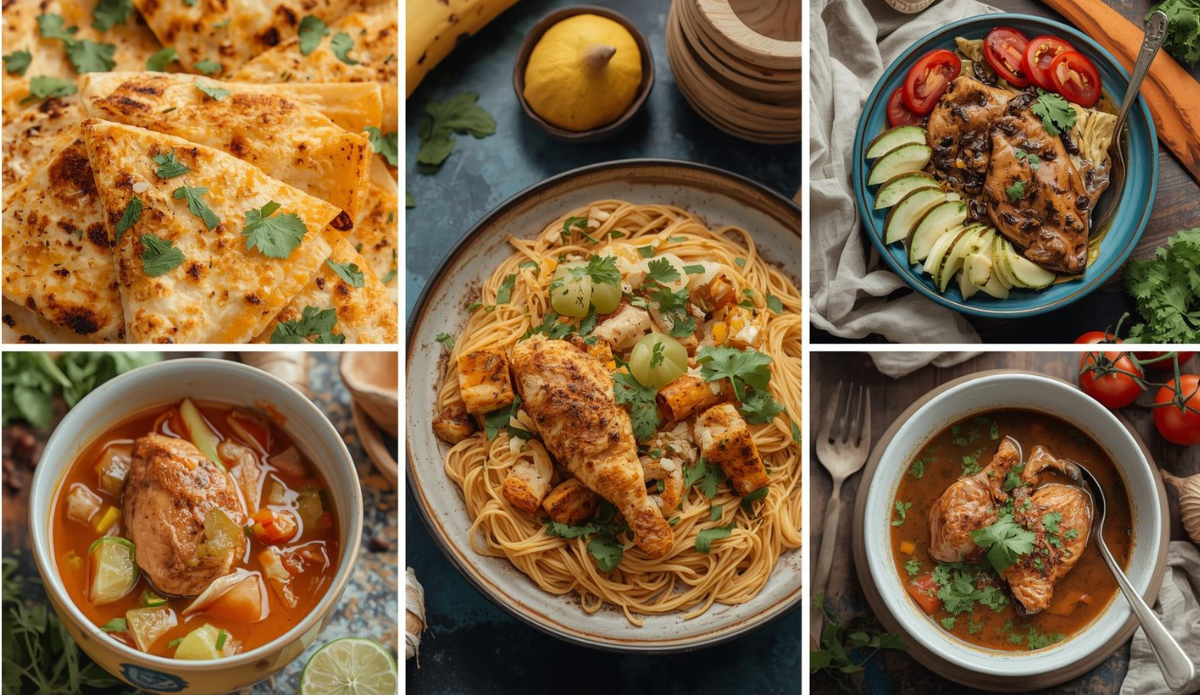
- Look at the menu’s authenticity: An extensive menu that includes dishes like yucca with chicharrón, stuffed bread with chicken, Salvadoran hen soup, tamales, and atoles is usually a good sign that the restaurant takes tradition seriously.
- Observe if pupusas are made to order: If you see a steady flow of diners and pupusas coming off the griddle steaming hot, it’s a guarantee of freshness. Avoid places where pupusas might be pre-cooked and reheated.
- The local’s test: The best indicator of quality is the clientele. If the restaurant is full of Salvadorans or Central Americans, you’re in the right place. It’s the most authentic validation you can get.
- Check social media: Many restaurants post their daily specials, hours, and photos of their dishes on Instagram or Facebook. It’s a good way to see what the food looks like before you go.
Frequently Asked Questions About Salvadoran Restaurants
What are pupusas?
They are the national dish of El Salvador: thick, handmade corn (or rice) tortillas, stuffed with cheese, chicharrón, beans, loroco, or other ingredients, and cooked on a griddle. They are served with curtido and tomato sauce .
How much does it cost to eat at a Salvadoran restaurant?
It’s generally very affordable. In El Salvador, pupusas cost between $0.50 and $1.50 USD each, and a full plate can range from $3-$8 USD at street stalls or $5-$15 USD in established restaurants . In the United States, pupusas typically cost between $2 and $4 each, and main courses between $10 and $20.
What is the most famous dish in El Salvador?
Without a doubt, the pupusa. It’s the country’s culinary ambassador and the dish that has transcended borders, recognized by UNESCO as Intangible Cultural Heritage .
Where are the most Salvadoran restaurants in the United States?
In the cities with the largest Salvadoran communities: Los Angeles (the largest in the country), Houston, Washington D.C., New York (especially in Queens and Long Island), the Washington D.C. metropolitan area (Maryland and Virginia), and Miami.
What does “pupusódromo” mean?
It’s a colloquial Salvadoran term for a place, often outdoors or under a covered area, where several pupuseria stalls are concentrated side-by-side. It’s a gastronomic destination in itself, like the famous Pupusódromo in Los Planes de Renderos .
Explore Salvadoran Gastronomy
Salvadoran food is a universe of flavors waiting to be discovered. From the humble yet sublime pupusa to the sophisticated creations of the new author cuisine, there’s a story, a tradition, and a flavor waiting in every bite.
We invite you not to settle for just one restaurant. Dare to try different places, ask locals for their favorites, explore the menus beyond pupusas, and let yourself be surprised by the richness of this cuisine. Try the stuffed bread, venture into yucca, refresh yourself with morro horchata, and finish with a sweet corn tamale.
Whether you’re in a big U.S. city or traveling the roads of El Salvador, the best way to live this experience is with the freedom to move at your own pace. Plan your route, make a list of must-visit restaurants, and go out to discover the true flavors of El Salvador. ¡Buen provecho!
Share this content:
Post Comment