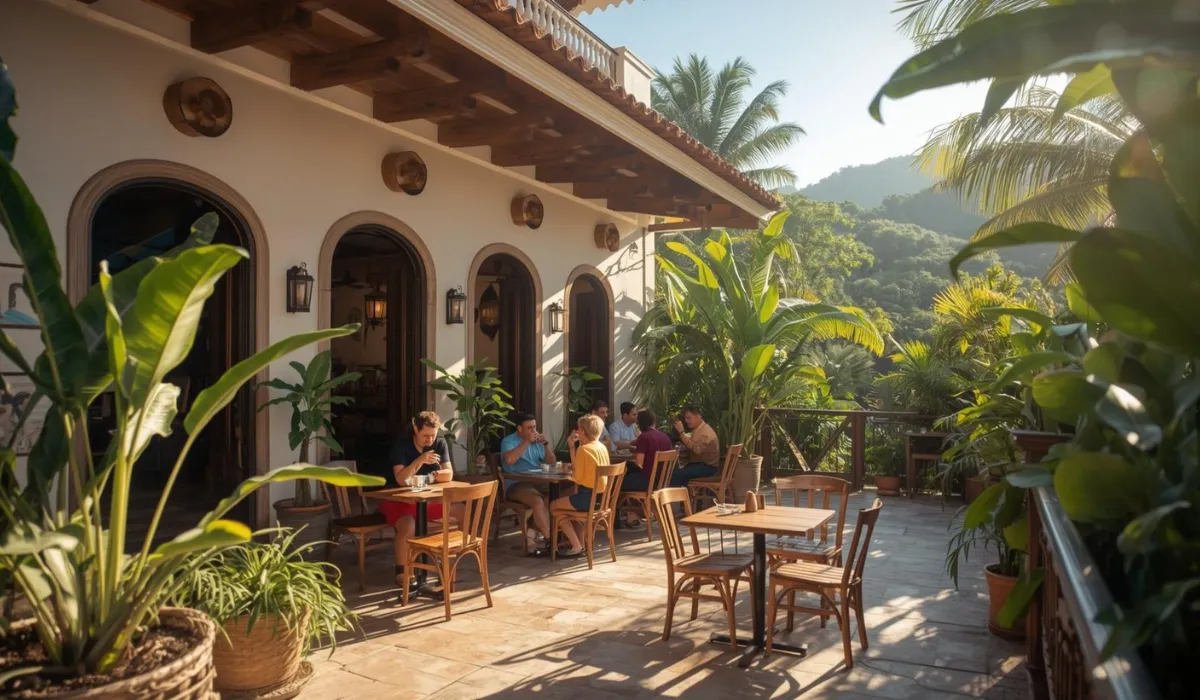
The best cafés in El Salvador stand out not only for the quality of their beans but also for the experience their coffee shops offer. From modern spaces in San Salvador to cozy spots in the country’s interior, this guide brings together the most recommended places to enjoy authentic Salvadoran coffee.
If you thought you already knew El Salvador’s coffee, get ready for a surprise. The 2025-2026 harvest has been historic: three coffees scored over 90 points at the Cup of Excellence—the world’s most demanding competition—and a Pacamara from Chalatenango was crowned the country’s best for the fifth time in its history.
El Salvador is experiencing a sweet moment. Not only are we producing beans that buyers from the United Arab Emirates, South Korea, and the Netherlands compete for at international auction, but we are also creating cafés that honor that effort. In 2026, the coffee experience goes far beyond the beverage itself: it’s culture, technology, and national pride.
Here’s everything you need to explore, taste, and take home the best of Salvadoran coffee.
Why Is El Salvador Famous for Its Coffee?
Coffee History and Tradition
Coffee arrived in El Salvador in the mid-19th century from Costa Rica, promoted by President Eugenio Aguilar. What began as an experiment on small farms quickly transformed into the backbone of the national economy following the decline of indigo.
Between 1920 and 1970, El Salvador became the world’s fourth-largest coffee producer and Latin America’s leading producer in per capita exports. Our beans were synonymous with quality on the New York and London exchanges.
The civil war and agrarian reform of the 1980s fragmented large estates into cooperatives. It was a harsh blow: thousands of farming families had to reinvent themselves with smaller plots but carried knowledge accumulated over generations.
That reinvention is key to what we enjoy today. Unable to compete in volume, Salvadoran coffee growers bet everything on quality. The result: over 90% of our coffee is shade-grown, cultivated in forest ecosystems, and selectively hand-picked.
The seven coffee mountain ranges are the heart of this story:
| Region | Departments | Altitude | Cup Profile |
|---|---|---|---|
| Apaneca-Ilamatepec | Santa Ana, Sonsonate, Ahuachapán | 1,200 – 1,800 masl | Citrus acidity, floral notes, silky body |
| Alotepec-Metapán | Chalatenango, Santa Ana | 1,500 – 2,000 masl | Red fruits, chocolate, bright acidity |
| El Bálsamo-Quetzaltepec | La Libertad | 1,000 – 1,600 masl | Medium body, chocolate notes, Pacific influence |
| Tecapa-Chinameca | Usulután, San Miguel | 1,000 – 1,700 masl | Heavy body, sweet, caramel |
| Chichontepec | San Vicente | 900 – 1,400 masl | Minerality, mild acidity |
| Cacahuatique | Morazán, San Miguel | 1,000 – 1,500 masl | Complexity, herbal notes, emerging |
| Comalapa | La Paz, San Salvador | 700 – 1,200 masl | Traditional, balanced body |
What Makes Salvadoran Coffee Special
If there’s one word you should remember, it’s Pacamara.
This hybrid—created in 1958 by the Salvadoran Institute for Coffee Research (ISIC) by crossing Pacas and Maragogipe varieties—is our gift to the world. It produces exceptionally large beans—almost double that of traditional Bourbon—and a cup with notes ranging from tropical fruits to dark chocolate and spices.
At the 2025 Cup of Excellence, a Pacamara from Finca Santa Rosa (Chalatenango, 1,600 masl) scored 90.93 points—the highest score of the competition. This farm has won first place five times. It’s not coincidence; it’s mastery.
But El Salvador doesn’t live by Pacamara alone. Bourbon remains our workhorse. El Salvador is one of the few countries that still produces high-altitude Arabica Bourbon in significant volumes, with a quality that international tasters describe as “sweet, clean, with perfectly integrated acidity.”
The Geisha variety, though scarcer, is gaining ground. Finca La Pacaya, in the Apaneca-Ilamatepec mountain range, scored 90.30 points in the Natural category with a Geisha cultivated between 1,700 and 2,000 masl. This coffee competes directly with Panamanian lots that exceed $100 per pound at auction.
Best Cafés in San Salvador
The capital concentrates the finest of the new coffee wave. Here’s where to go, what to order, and why each visit is worth your time.
Viva Espresso
Atmosphere: Professional, minimalist, with natural light and wooden tables. They’ve been El Salvador’s specialty coffee reference for over a decade. Locations in Colonia San Benito, Escalón, and Merliot.
Recommended Specialties:
- Geisha Honey (when available): A sensory journey of yellow fruits and bee honey.
- Cold Brew: 24-hour slow maceration. Served in a tall glass with large ice cubes.
- Affogato: Artisanal vanilla ice cream drowned in Pacamara espresso.
Differentiator: They’re roasters. You can buy whole beans with the roast date—not the expiration date—and take home coffee scoring up to 92 points.
Ideal for: Working in the mornings (stable WiFi, accessible outlets) or professional meetings.
1,200 Café
Location: Inside the National Library (BINAES), Historic Center.
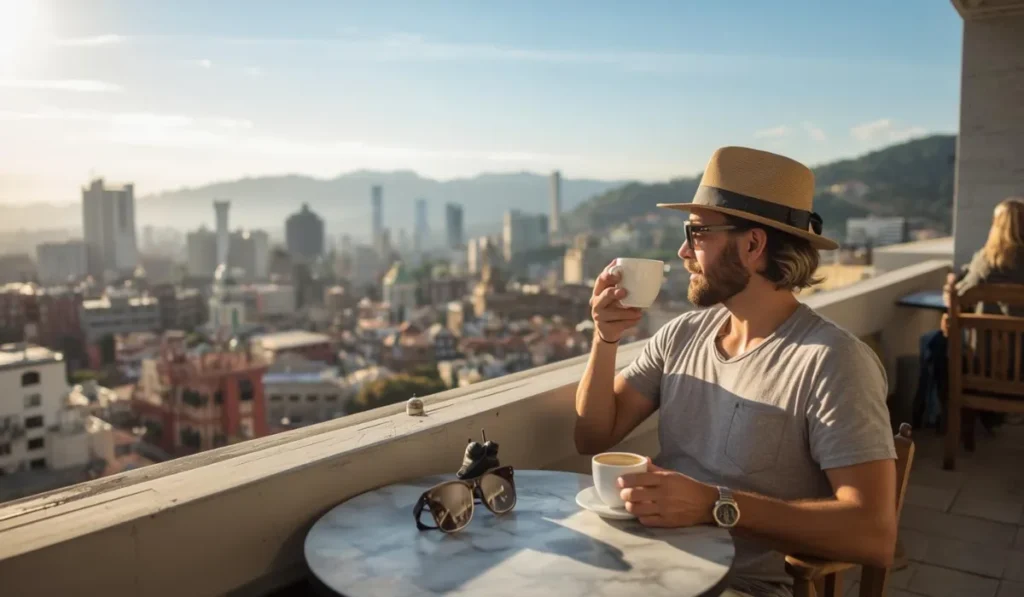
Atmosphere: Modern, bright, with one of the best views of San Salvador. The building is a masterpiece of contemporary architecture, and the café occupies an interior balcony overlooking the old plaza.
Preparation Methods: V60, Aeropress, Chemex. Their filter menu changes weekly based on lots received from small producers.
Standout Experience: Order the “Historic Center Tasting” —three short methods using the same bean prepared different ways. The barista guides you through the cupping.
Ideal for: Digital nomads, students, travelers wanting to connect with the capital’s new downtown energy.
Café Luz Negra
Concept: Art gallery + specialty coffee. It’s the most authentically bohemian space in San Salvador.
Atmosphere: Exposed brick walls, rotating exhibitions by contemporary Salvadoran artists, conversation-level music.
Crowd: Artists, curators, passing foreigners, design students.
Recommended Drinks:
- Espresso Tonic: Artisanal tonic water, Bourbon espresso, orange slice.
- Artisanal Mocha: Salvadoran origin chocolate (70% cocoa) melted to order.
Location: San Benito, two blocks from the MARTE Museum.
La Sigua Café
Focus: 100% origin coffee, with full traceability from farm to cup. They work directly with producers—the name “Sigua” honors Salvadoran women.
Main Differentiator: Their “Women of Origin” program highlights lots produced exclusively by women coffee growers. Each bag carries the producer’s name and story.
House Recommendation: Coffee from Finca Mauritania, a multi-award-winning producer from the Apaneca area. Chocolate profile with cherry notes.
Location: Colonia Escalón, near the Masferrer roundabout.
Other Recommended Cafés
- Café Canela: A classic. Hearty breakfasts and perfectly prepared traditional coffee. Multiple locations.
- Beso de Café: Luxury pastry shop with specialty coffee standards. The almond croissant + cappuccino is unbeatable.
- Cumbres del Volcán: Direct sales point from a Santa Ana producer family. Ideal for buying farm-specific coffee.
- Madre Coffee: The new sensation among purists. Only filter methods, only seasonal beans, zero brown sugar.
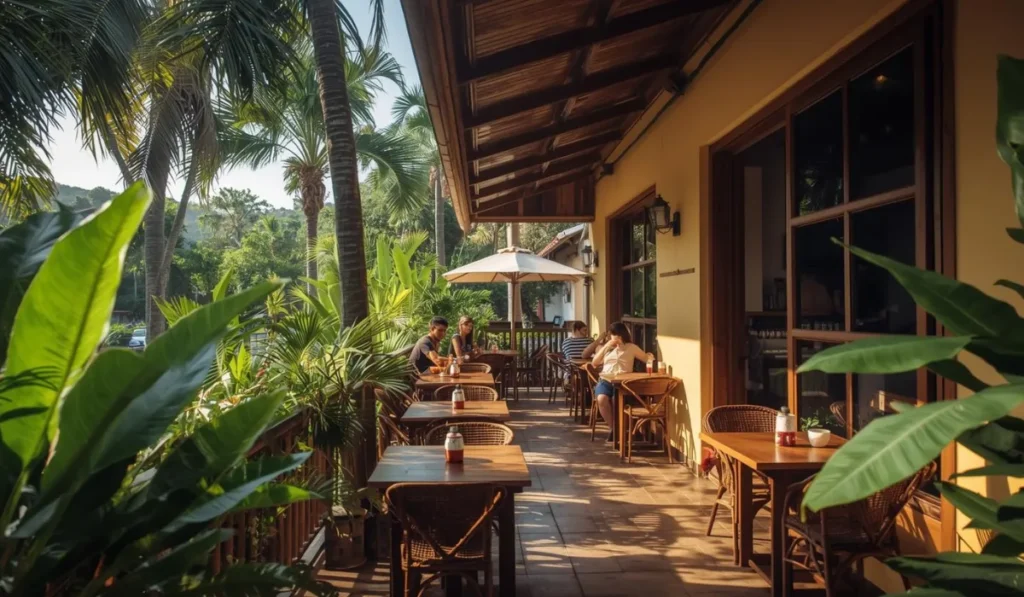
Best Cafés Outside the Capital
Cafés in Santa Tecla
Santa Tecla has established itself as the natural extension of the capital’s coffee scene, with a more relaxed personality and neighborhood feel.
Só7o Café:
- Atmosphere: Aesthetic, carefully curated, with an interior terrace. It’s one of those places where every element is placed to be photographed.
- Unique Proposition: They combine specialty coffee with cocktail-making. The Coffee Old Fashioned (bourbon, concentrated cold brew, orange bitters) is an experience.
- Hours: They stay open late—rare among Salvadoran cafés.
La Casona del Cafetal:
- Atmosphere: Rustic, inside a restored 19th-century colonial house.
- Differentiator: They have their own processing facility. You can see parchment coffee and learn about the process while enjoying your cup.
- Recommendation: The countryside breakfast with house coffee.
Cafés on the Ruta de las Flores
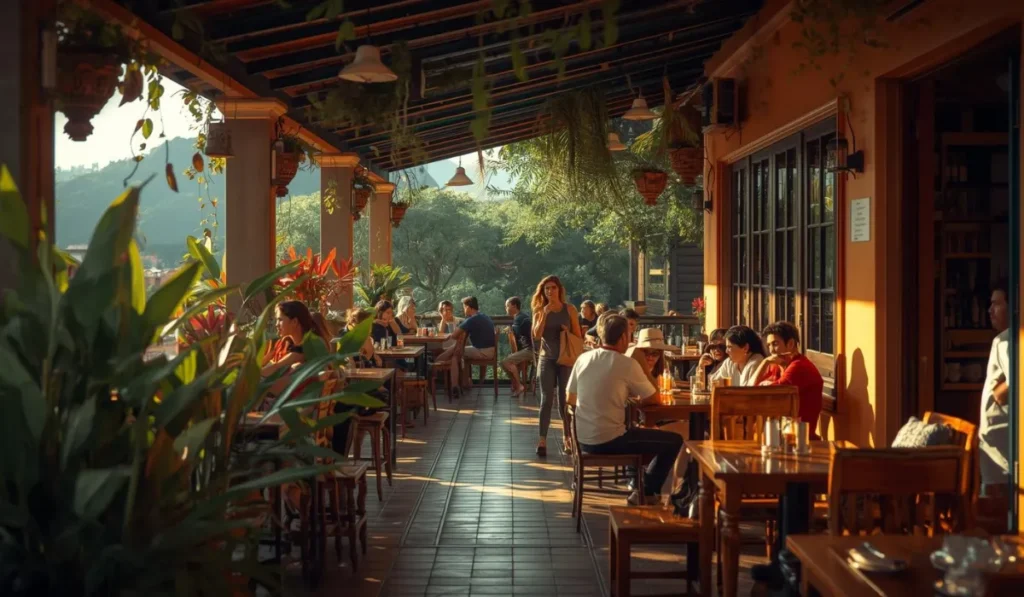
The Ruta de las Flores is, simply put, the ultimate coffee destination. The towns of Apaneca, Juayúa, and Ataco house cafés with breathtaking views.
Café Albania (Apaneca):
- Experience: Lookout café at 1,400 masl. On clear days, you can see the blue Pacific coast.
- Plus: Central America’s largest maze is right next to the café. Buy the combo ticket.
- When to go: Between November and February, coffee blossoms cover the hillsides in white.
El Carmen Estate:
- Experience: Café inside a producing farm. They offer the “From Seed to Cup” package: nursery tour, wet mill, and cupping lab.
- Duration: 2 hours. Includes tasting of three different profiles.
- Reservation: Required 48 hours in advance.
La Favorita (Ahuachapán):
- Experience: Century-old farm (founded in 1890) with a coffee museum. They preserve original early 20th-century German machinery.
- Must-do: Historical Pacamara tasting—beans from plants over 60 years old.
Coffee Farms You Can Visit
If you really want to understand Salvadoran coffee, you need to step onto coffee soil.
Finca El Manzano (Santa Ana):
- Ownership: Pacas family, one of the most respected coffee dynasties.
- Tour: Immersive, 3 hours. Shade forest walk, grafting explanation, traditional lunch included.
- Altitude: 1,550 masl.
Finca San Antonio (Santa Ana):
- Operated by: Viva Espresso.
- What you’ll find: The origin of “Buenos Días, Rey” coffee, one of their best-selling blends in the US.
- Differentiator: Technical tour. They explain ecological processing and honey water treatment.
- Requirement: Genuine interest in the process (not just “selfie and coffee”).
Los Nogales (Apaneca):
- Specialty: Experimental processes. They pioneered lactic and anaerobic fermentations in Central America.
- Experience: Tasting of three different processes from the same Pacamara lot: washed, honey, and natural. Mind-blowing.
Specialty Coffee in El Salvador
Award-Winning Coffees: Cup of Excellence 2025
The Cup of Excellence is the Oscar of coffee. There’s no more rigorous competition: coffees are blind-cupped by international juries in multiple rounds, and only those exceeding 87 points—on a 100-point scale—qualify for the global auction.
El Salvador has hosted this competition since 2003 and is a founding member of the Alliance for Coffee Excellence.
The 2025 winners are historic:
| Category | Farm | Region | Variety | Process | Score |
|---|---|---|---|---|---|
| Washed/Honey | Santa Rosa | Alotepec-Metapán | Pacamara | Honey | 90.93 |
| Natural | La Pacaya | Apaneca-Ilamatepec | Geisha | Natural | 90.30 |
| Experimental | Las Duanas | Alotepec-Metapán | Pacamara | Anaerobic Washed | 90.18 |
Why does this matter to you?
Because these coffees exist. They are produced. And although most are sold at international auction to buyers from Japan, Korea, or Norway, some farms reserve small lots for the local market.
Ask at La Sigua, Viva Espresso, or directly at the farms if they have the award-winning lot from Finca Santa Rosa or Las Duanas available. It’s expensive (a pound can cost $35-$50), but it’s the highest-scoring coffee you’ll ever taste.
Additionally, international recognition opens doors. The president of the Salvadoran Coffee Institute confirmed that new markets like the United Arab Emirates, Saudi Arabia, Kuwait, Turkey, and South Korea are enthusiastically buying Salvadoran coffee. The world is looking toward our mountains.
Where to Buy High-Quality Salvadoran Coffee
Local Roasters:
- Mirazu: Medium roast, very consistent. Bourbon specialists.
- The Roastery: Light roast style, very Nordic school. They sell online and deliver.
- Café La Theron: Pioneers in experimental fermentations. Their “Lactic Series” has a cult following.
Direct Farm Purchases:
- Cumbres del Volcán: Sales points in San Salvador and Santa Ana. Coffee arrives every Friday, freshly roasted.
- Finca El Manzano: Sell through their virtual store and deliver at the farm with prior coordination.
Cafés Selling Beans:
All cafés mentioned in this guide sell whole bean or ground coffee. Always ask for the roast date. Specialty coffee is ideally consumed between 7 and 30 days after roasting. After 45 days, it loses its best attributes.
How to Tour the Best Cafés in El Salvador
Exploring the best cafés in El Salvador can mean moving between different areas of the capital or even visiting destinations outside the city. To make the most of your coffee route, having a reliable mobility solution can make all the difference.
San Salvador has dense traffic, and many of the best cafés—especially in San Benito and Escalón—lack their own parking. If you plan to visit three or four places in one day, relying on taxis or waiting for buses can frustrate the experience.
Plus, the gems are in the mountains. The Ruta de las Flores, Santa Ana, Chalatenango. Getting there requires time flexibility and the ability to improvise: spotting a “Farm Coffee” sign on the road and being able to turn off.
With Carvi, you can find practical, safe transportation options, making your transfers between cafés and coffee-related tourist destinations easier.
Carvi is a 100% Salvadoran platform that functions as the “Airbnb of cars“: it connects travelers with local owners who rent out their vehicles. The entire process is digital and takes less than 5 minutes: choose dates, upload a photo of your license, pay online, and coordinate delivery via WhatsApp.
The big advantage for coffee lovers: You don’t need a credit card or leave hundreds of dollars in deposits. Traditional agencies block between $200 and $1,500 on your card as a guarantee; Carvi operates without that system. This means you can allocate that credit to what matters: buying coffee, paying for tastings, staying at farms.
Founder Danni Flores explains it this way: “I want a tourist to arrive in El Salvador, reserve a car in 5 minutes, and feel at home.” And yes, they deliver at the international airport, ready for you to start your route the moment you land.
👉 Learn more about their services at Carvi
Tips for Choosing the Best Coffee According to Your Style
If You’re Looking for Coffee to Work From
You need three things: stable WiFi, accessible power outlets, and manageable noise levels.
- 1,200 Café (BINAES): The best connection in the city. It’s institutional fiber optic—never fails. Spacious tables, natural light.
- Viva Espresso (Escalón): Mornings (7:00–10:00 AM) are quiet and productive.
- Madre Coffee: Small atmosphere, few tables, but very focused. Ideal for individual work sessions.
Avoid: Lunch hours (12:00–2:00 PM) and Saturday mornings.
If You Prefer a Gourmet Experience
You’re here for the coffee itself, not the atmosphere.
- Ask about traceability: “Which farm is this coffee from? What process does it use?” A good barista lights up when you ask this.
- Seek filter methods: V60, Chemex, Kalita. Espresso with milk hides defects; filter coffee exposes them.
- Demand medium or light roasts: Dark roasts are for traditional espresso. To appreciate the origin, you need a roast that respects the bean.
Places for this: La Sigua, Madre Coffee, and Viva Espresso locations with certified baristas (ask if they have SCA certification).
If You Want Views and a Tourist Experience
Coffee tastes better with a panorama.
- Café Albania (Apaneca): The view of the Pacific is unbeatable.
- 1,200 Café: The urban view of the renovated Historic Center.
- Finca El Carmen: The mountains of Apaneca.
- Cumbres del Volcán (Santa Ana): From their terrace, you see the volcano.
Frequently Asked Questions About the Best Cafés in El Salvador
What is the most famous coffee in El Salvador?
Pacamara. It’s our intellectual denomination of origin—coffee not produced in any other country with the same personality. In 2025, a Pacamara from Finca Santa Rosa was the top winner at the Cup of Excellence with 90.93 points.
Where is the best coffee in the country produced?
Historically, the Santa Ana (volcano) and Apaneca-Ilamatepec areas have won most awards. However, Chalatenango (Alotepec-Metapán region) is putting up an impressive fight: Finca Santa Rosa, from Chalatenango, has won first place five times.
How much does coffee cost at a specialty café?
- Americano / Filter coffee: $2.50 – $3.50
- Cappuccino / Latte: $3.50 – $4.75
- Filter method (V60/Chemex): $4.00 – $6.00 (serves two cups)
- Pound of specialty beans: $12 – $25 (award-winning lots can exceed $40)
Prices are in US dollars—El Salvador’s official currency—so there’s no mental math for international travelers.
What is the best time to visit coffee farms?
November to February. It’s blooming season: the plantations are covered in small white flowers with a sweet scent, and the weather is cool in the mountains.
You can also visit during harvest season (October to January) to see ripe fruit picking. However, producers are very busy, so book in advance.
Conclusion
The best cafés in El Salvador offer much more than a beverage: they represent tradition, quality, and a unique experience for locals and visitors alike.
In 2026, the country celebrates an exceptional moment. Our coffees compete in the global elite—and win. Our baristas master techniques that a decade ago were only seen in Melbourne or Copenhagen. Our farms open their doors to tell the story behind each cup.
Whether you prefer a modern city café overlooking the Historic Center, a roasting workshop in a Santa Tecla colonial house, or a century-old farm on the slopes of a volcano, El Salvador has a cup waiting for you.
And the best part: we’re still an accessible, authentic, and surprising destination. We haven’t been consumed by mass tourism. Here, you can still arrive, ask “what’s the name of your farm?” and have the coffee grower invite you to sit on their terrace.
Salvadoran coffee is a national pride that, at last, we are learning to enjoy at home.
Happy cupping and safe travels.
Did you visit a café that should be on this list? Did you find a Pacamara that blew your mind? Write to us. This guide is updated every year with new Cup of Excellence winners and the most relevant new openings. El Salvador’s coffee scene doesn’t stop—neither do we.
Share this content:
Post Comment