- Historical and Agricultural Roots of Salvadoran Ingredients
- Profiles of Key Native Ingredients
- Comparative Visual Guide of Native Ingredients
- Modern Innovation with Ancient Roots: The Case of Ron Cihuatan
- Craftsmanship as an Extension of Gastronomic Culture
- Where to Experience and Acquire These Ingredients
- Conclusion: A Living Heritage that is Tasted and Felt
To truly understand the soul of El Salvador, you must discover the flavors that have fueled its history. This guide explores El Salvador’s native ingredients, the cornerstones of its rich and distinctive cuisine. Beyond corn, we’ll explore everything from the unique loroco flower to the morro seed, delving into their origins, culinary uses, and profound cultural significance. Join us on a journey through the nation’s pantry, where each product tells a story of the land and its people.
🚗 Want to experience these native ingredients beyond theory?
Reading about Salvadoran cacao, loroco, or tropical fruits is one thing — visiting local markets, farms, and traditional kitchens is another.
With Carvi, you can rent a car in minutes and explore El Salvador at your own pace — without depending on taxis or fixed schedules.
👉 Reserve your vehicle now and start your culinary journey
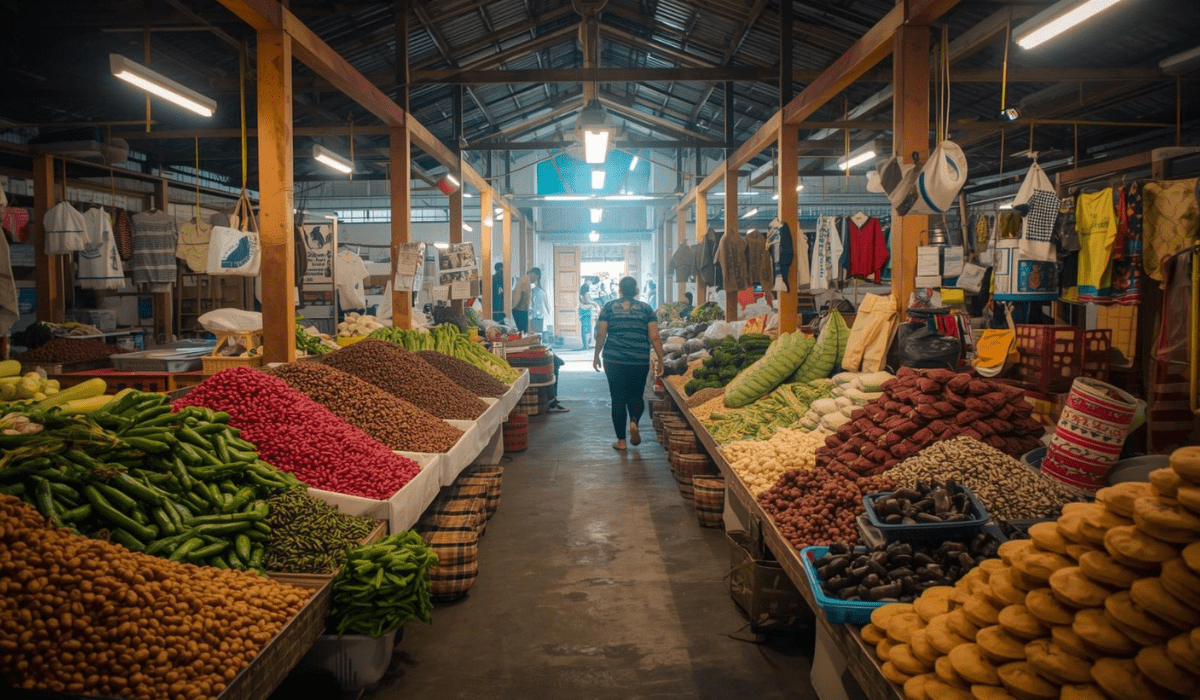
Historical and Agricultural Roots of Salvadoran Ingredients
El Salvador’s agricultural history is key to understanding its cuisine. Since pre-Columbian times, the fertile land was cultivated by peoples like the Pipil, who developed advanced agriculture. Corn, beans, and squash formed the fundamental food triad, a system that endures.
With the arrival of the Spanish in 1524, new products and exploitation systems were introduced. During the colonial period, El Salvador became the agricultural heart of the Captaincy General of Guatemala. First, cacao was the main source of wealth in the 16th century. Then, in the 18th century, indigo drove the economy and led to the development of large haciendas, though it meant a great burden for the indigenous labor force. These cycles of “boom and bust” of export products left an indelible mark on the landscape and society, while crops for local consumption remained the daily sustenance of the population.
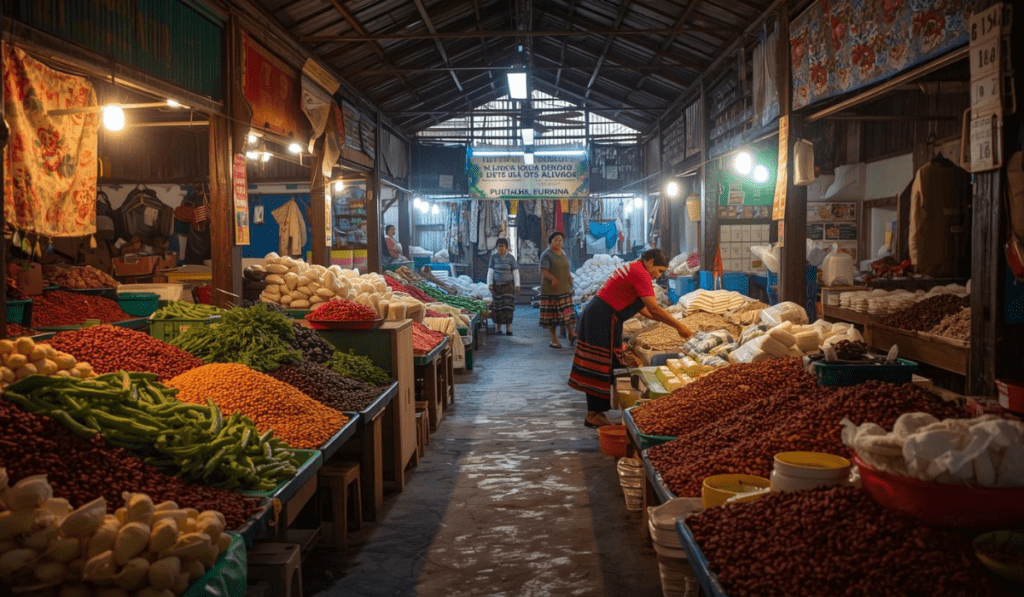
Profiles of Key Native Ingredients
1. Corn: The Cornerstone
It is no exaggeration to say that Mesoamerican civilization was built on corn. In El Salvador, this cereal transcends food: it is culture, ritual, and daily life.
- Cultural Significance: It is the spiritual and material base. From it comes masa (dough), the absolute protagonist of the cuisine.
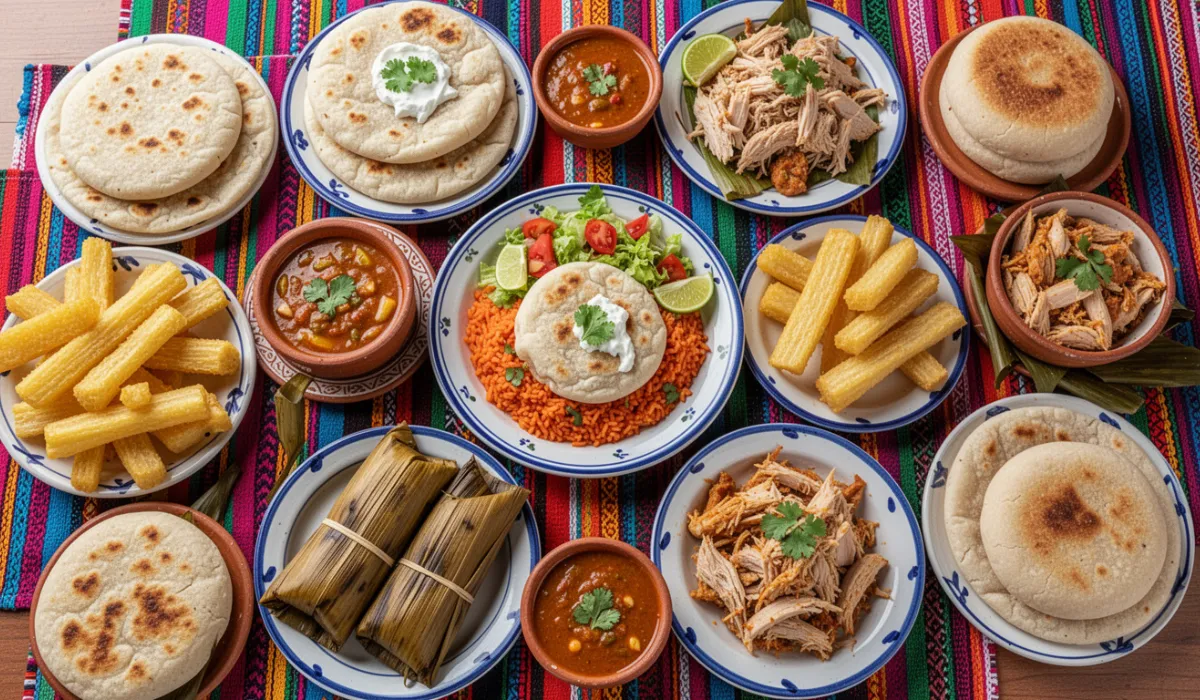
- Culinary Uses: Everything starts here. It is the essential element for pupusas (the national dish), tortillas, atoles (thick hot drinks), tamales, and riguas (thick tortillas with ingredients).
- Unique Fact: The nixtamalization process (cooking the grain with lime) was a pre-Columbian discovery that improves its nutritional value and flavor, a technique passed down for centuries.
2. Loroco: The National Flower in the Kitchen
This is perhaps the most distinctive native ingredient and the one that generates the most curiosity outside Salvadoran borders.
- What is it?: Loroco (Fernaldia pandurata) is an edible flower, green in color, with a unique aroma and flavor, difficult to describe: slightly floral, herbaceous, and with an earthy touch.
- Culinary Uses: It is mainly used in its bud form (unopened). It is the star filling for pupusas, especially combined with cheese. It is also incorporated into sauces, soups, and stews, where it imparts its characteristic fragrance.
- Substitute: There is no real substitute. Its flavor is unrepeatable, making it a true gastronomic emblem.
🌱 Loroco is mainly cultivated in rural regions. If you want to explore these areas and taste it freshly harvested, flexible transportation makes all the difference.
👉 Explore freely with Carvi — Reserve here
3. Morro Seed: The Flavor of Liquid Tradition
The morro tree (Crescentia alata) is the national tree, and its spherical, hard fruit has had uses ranging from craftsmanship (the famous jícaras or bowls) to gastronomy.
- Culinary Uses: The roasted and ground seeds of the fruit are the base for horchata de morro, the traditional Salvadoran drink. Unlike other horchatas (like the Mexican rice-based one), morro horchata has a beige color, a toasted nutty flavor, and a particularly creamy and refreshing texture.
- Significance: Drinking a morro horchata is connecting with a tradition that wisely uses local resources, from the container to the content.
4. Red Bean: The Essential Companion
Together with corn, it forms the perfect nutritional and cultural duo, known as the “milpa.”
- Culinary Uses: It is consumed in multiple forms: whole in broths, strained and fried (like refried beans or “volcados”), and is the main component of “casamiento” (rice mixed with beans, symbolizing an indissoluble union). It is also a classic and delicious filling for pupusas.
- Variant: Although red is the most common, other varieties like black beans are also consumed.
5. Indigo (Añil): The “Blue Gold” that Colored History
Although not a food ingredient, no story about the native ingredients of El Salvador would be complete without mentioning indigo. This shrub, from which a deep blue dye is extracted, was during the 18th century the main export product and defined the country’s economy and social structure. Today, its legacy endures in textile craftsmanship, where it is used to dye fabrics with traditional techniques, creating pieces of immense cultural value.
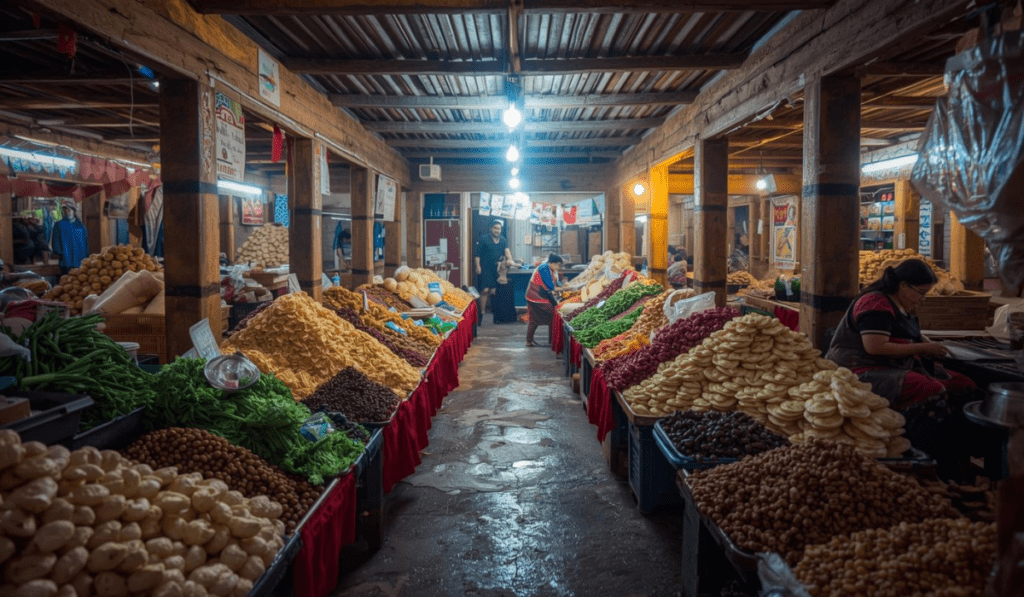
Comparative Visual Guide of Native Ingredients
To understand at a glance the wealth and diversity of the Salvadoran pantry, the following table compares the key ingredients:
| Ingredient | Category | Flavor/Texture Profile | Iconic Culinary Use | Most Common Form of Consumption | Historical/Cultural Notes |
|---|---|---|---|---|---|
| Corn | Cereal (Base) | Sweet, earthy. Adaptable texture (smooth in atoles, chewy in pupusas). | Pupusas, Tortillas, Atoles. | Nixtamalized masa (fresh). | Base of Mesoamerican civilization. Symbol of life and sustenance. |
| Loroco | Flower | Aromatic, floral, herbaceous, slightly earthy. Tender texture. | Pupusas with cheese and loroco, Sauces. | Fresh buds or preserved. | Flagship ingredient, unique and distinctive of El Salvador. |
| Morro Seed | Seed / Drink | Nutty, toasted. Creates a creamy drink. | Horchata de Morro. | Seeds toasted, ground, and mixed with water and spices. | From the national tree. Integral use: food and craft (jícaras). |
| Red Bean | Legume | Earthy, creamy (especially when refried). | Casamiento, Refried Beans, Pupusa Filling. | Cooked, then refried or whole. | Fundamental part of the milpa system (with corn). Symbolizes the fundamental. |
| Cacao | Seed / Fruit | Bitter and complex as a bean; rich and aromatic as a drink. | Drinking Chocolate (hot beverage). | Fermented, dried, and ground bean. | Was the main export product in the 16th century. Drink of pre-Hispanic origin. |
Modern Innovation with Ancient Roots: The Case of Ron Cihuatan
El Salvador’s relationship with its native ingredients is not limited to traditional cuisine. An excellent example of innovation with identity is Destilería Cihuatan, which produces high-quality rums inspired by Mayan culture and using Salvadoran sugarcane.
- Connection with the Land: Cihuatan rums are made exclusively with molasses from sugarcane from the Valle de Cihuatán, leveraging local varieties and fertile soil that provides unique characteristics.
- Sustainability: The distillery implements circular practices, such as using bagasse (sugarcane residue) to generate electricity for its operations and even for the national grid.
- Cultural Fusion: Each rum in its range (like Jade, Cinabrio, or Xaman XO) pays homage to a Mayan deity or concept, and some even finish their aging in barrels of Mayan ceiba oak, closing a perfect circle between the local ingredient, tradition, and the modern art of distillation. This project demonstrates how the native ingredients of El Salvador can be the basis for world-class products that tell a deep story.
Craftsmanship as an Extension of Gastronomic Culture
The appreciation for native materials and traditional techniques transcends the plate. The Premio Nacional de Artesanías 2025 (National Craft Award), organized by CONAMYPE under the motto “Hands that Create Identity,” celebrates precisely this link. Artisans are awarded for transforming local raw materials like clay, leather, wood, and natural fibers into objects that narrate Salvadoran identity.
Many of these pieces, such as morro jícaras or fabrics dyed with indigo and other natural inks, are intrinsically linked to the culinary and domestic sphere. Recognizing this art is understanding that the culture of the native ingredients of El Salvador is an integral ecosystem where what is sown, cooked, and created by hand is part of the same story of belonging and national pride.
Where to Experience and Acquire These Ingredients
Global interest in authenticity and emerging destinations has positioned El Salvador as one of the countries with the highest recent tourism growth. For the gastronomic traveler, this translates into more opportunities to experience this food culture.
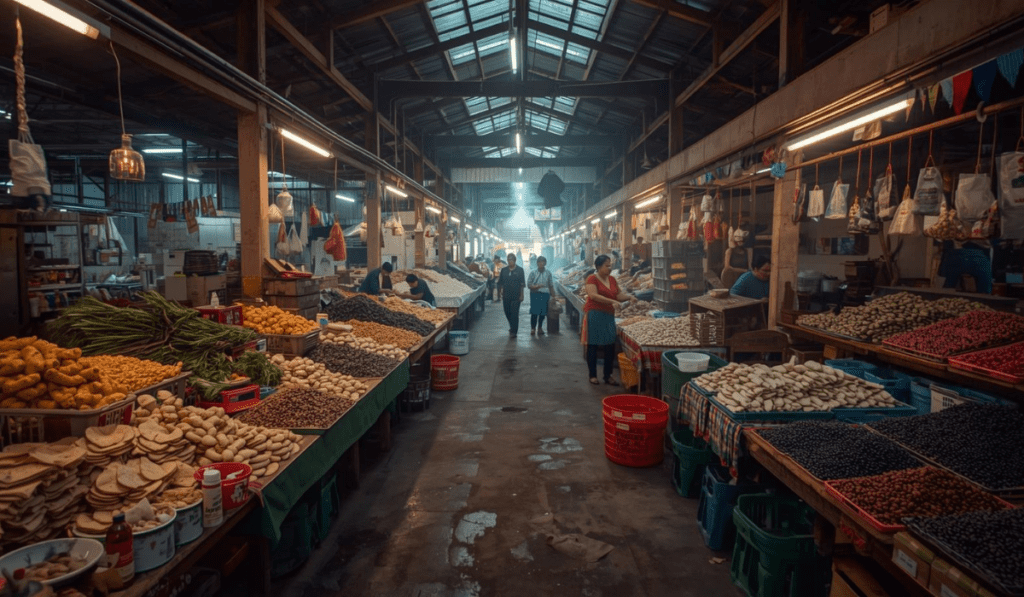
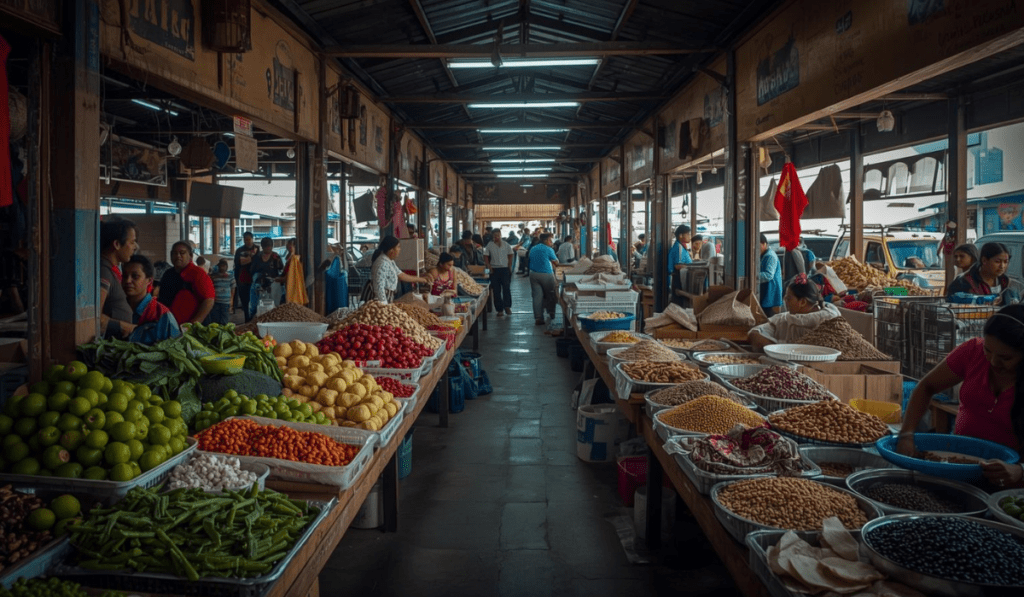
- In El Salvador: Visiting municipal markets (like the Central Market in San Salvador or those in cities like Sonsonate and Santa Ana) is a total sensory experience. There you will find these ingredients in their freshest and most vibrant state. Family-run pupuserías are the temple for tasting their masterful application.
- Outside El Salvador: In countries with a significant Salvadoran diaspora, it is possible to find specialized Latin stores that import key products. Look for corn masa for pupusas, preserved loroco (in jars or cans), morro flour for horchata, and Salvadoran red beans. Ron Cihuatan is also exported to various markets, being a sophisticated way to bring a taste of El Salvador to any home.
Conclusion: A Living Heritage that is Tasted and Felt
The native ingredients of El Salvador are the silent carriers of a collective memory. From the corn that has fed generations, to the loroco that perfumes the kitchen with its uniqueness, and from the indigo that dyed the economy with history to the sugarcane that is now transformed into award-winning rums, each one tells a part of this nation’s story.
Exploring this gastronomy is, therefore, much more than an act of eating; it is a way to understand the resilience, creativity, and deep attachment to the land that characterize El Salvador. It is a living heritage, reinvented in the hands of innovative chefs, in the barrels of master rum makers, and in the work of artisans, but one that never forgets its roots. It is a legacy that, fortunately, the world is ready to discover and savor.
🌎 Now that you understand the importance of El Salvador’s native ingredients, the next step is experiencing them firsthand.
From local markets to rural producers, every destination offers authentic flavors waiting to be discovered.
🚗 Travel with freedom, comfort, and flexibility.
👉 Book your car with Carvi today and create your own Salvadoran food journey
Share this content:
Post Comment