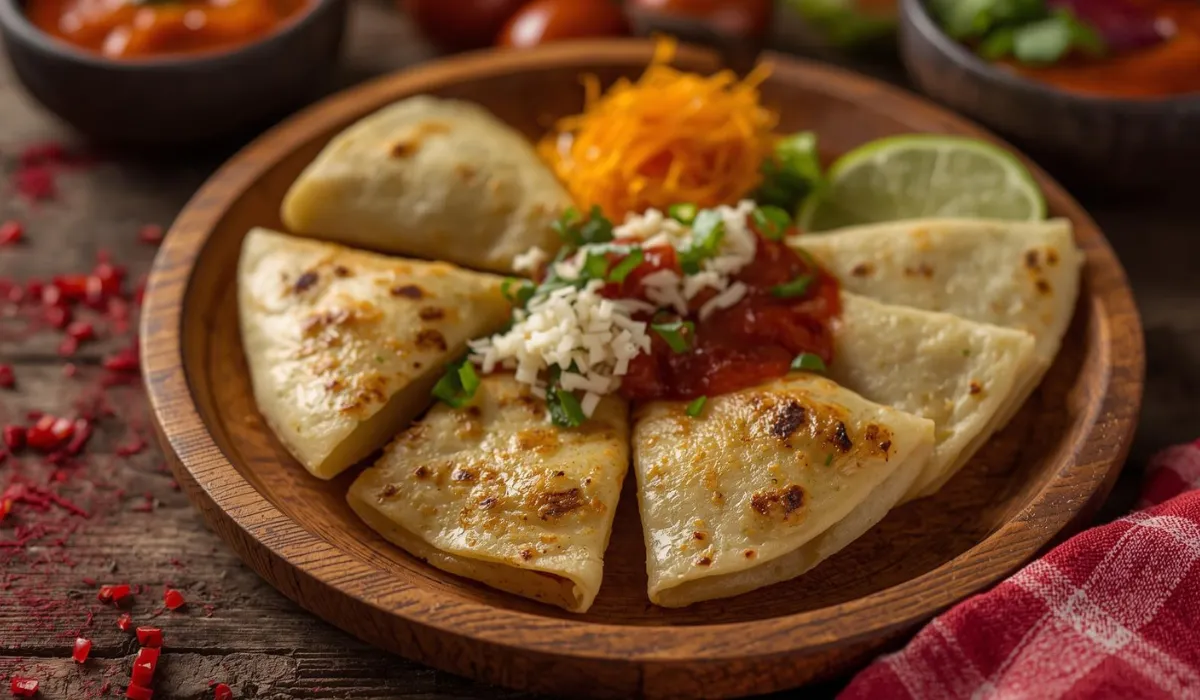
- What Are Pupusas? (Quick Definition)
- Types of Pupusas (Complete Guide) 🚀
- Where Do Pupusas Come From? (Origin)
- History of Pupusas (Timeline)
- What Are Pupusas Made Of? (Ingredients)
- Cultural Significance of Pupusas 🇸🇻
- Traditional Pupusas Recipe (Step by Step)
- Traditional Accompaniments for Pupusas
- Tips for Preparing Perfect Traditional Pupusas
- Differences Between Traditional and Modern Pupusas
- Traditional Pupusas as a Business Opportunity
- How Carvi Can Help Typical Food Businesses
- Gastronomic Tourism in El Salvador 🇸🇻
- Salvadoran Food Guide for Tourists
- Frequently Asked Questions about Pupusas (FAQ)
- Conclusion
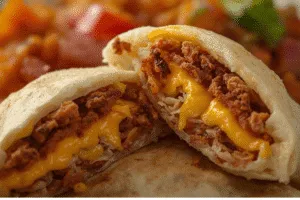
What are traditional pupusas? Thick handmade corn tortillas stuffed with cheese, beans, chicharrón, or loroco, served with curtido and tomato salsa.
Main types of traditional pupusas:
- Revuelta (mixed: cheese + beans + chicharrón)
- Queso (cheese)
- Frijol (beans)
- Chicharrón (seasoned ground pork)
Where do traditional pupusas come from? El Salvador, with pre-Columbian indigenous origins (Pipil people, over 2,000 years ago).me from? El Salvador, with pre-Columbian indigenous origins (Pipil people, over 2,000 years ago).
👉 Explore El Salvador freely and taste authentic pupusas on the road — Rent a car in El Salvador here
What Are Pupusas? (Quick Definition)
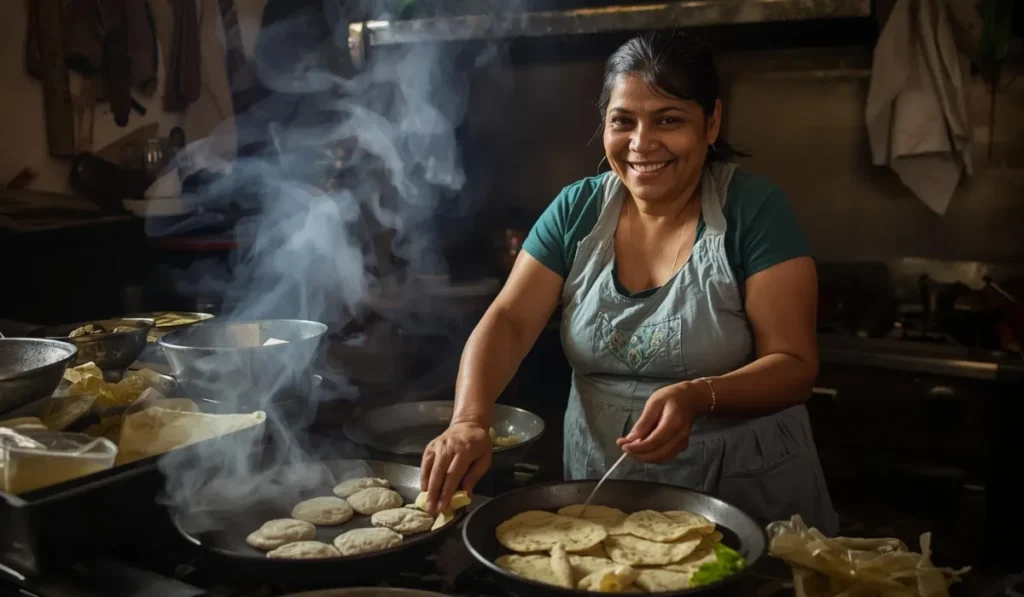
A traditional pupusa is a thick, handmade tortilla made from nixtamalized corn masa (or, in a regional variant, rice flour). It is characterized by being stuffed before cooking with ingredients such as cheese, refried beans, chicharrón (seasoned pork), or loroco. This technique fundamentally distinguishes it from other stuffed tortillas or arepas.
Pupusas are invariably served with curtido (a vinegar-fermented cabbage slaw) and natural tomato salsa, and the traditional way to eat them is with your hands.
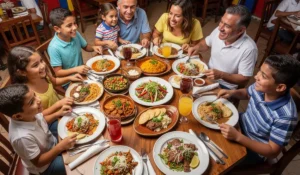
More than just food, the pupusa is an act of folk art, an element of social cohesion, and a powerful symbol of Salvadoran identity, both within and beyond its borders.
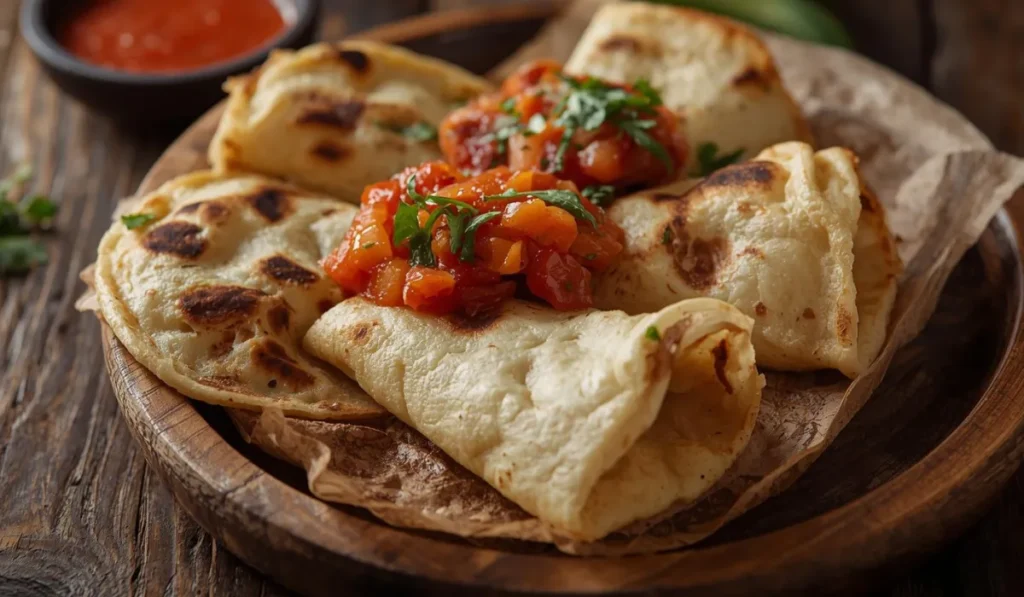
Types of Pupusas (Complete Guide) 🚀
The versatility of the masa allows for a delicious variety. These are the classic varieties you will find in any pupusería in El Salvador.
Revuelta Pupusa 👑
Considered by many to be the queen of pupusas. It is the quintessential combination that mixes cheese, refried beans, and chicharrón in a single filling. The name “revuelta” means “mixed” in Spanish.
Queso Pupusa (Cheese Pupusa) 🧀
The simplest and most comforting. Stuffed exclusively with melted cheese (quesillo or fresh cheese), its elastic texture and pure dairy flavor make it a universal favorite.
Frijol Pupusa (Bean Pupusa) 🌱
A deliciously vegetarian and flavorful option. It contains refried beans, which provide a velvety texture and a smoky, comforting flavor.
Chicharrón Pupusa 🐷
Ideal for lovers of intense flavors. The filling is made of finely ground, well-seasoned pork, juicy and full of character.
Other Regional Varieties
- Loroco pupusa — stuffed with a native edible flower
- Ayote pupusa — stuffed with squash
- Rice flour pupusa — typical of Olocuilta, with a finer, crispier texture
👉 Travel across pupusa regions with ease — Rent a 4×4 car in El Salvador to visit authentic pupuserías in small towns
Where Do Pupusas Come From? (Origin)
The origin of the pupusa is deeply rooted in pre-Hispanic Mesoamerican diets and is native to El Salvador.
Although its exact birth is subject to study, it is most likely a mestizo dish, the result of fusion between native cuisine and the Spanish culinary tradition brought during colonization.
Key Origin Facts:
- Pre-Columbian Roots: Indigenous communities in the region, especially the Pipil people (descendants of the Aztecs) and possibly Maya, were already preparing thick corn tortillas stuffed with native ingredients like squash (ayote), beans, and herbs over 2,000–3,000 years ago.
- Mestizo Evolution: With the arrival of the Spanish, the pupusa incorporated new ingredients such as cheese, pork (chicharrón), and the technique of curtido, shaping the recipe we know today. The oldest written record of the name “pupusa” dates back to 1837.
- National Recognition: In 2005, the Legislative Assembly of El Salvador officially declared the pupusa the National Dish and established the second Sunday of November as “National Pupusa Day.”
👉 Visit the birthplace of pupusas — Book your rental car in San Salvador and explore historic pupuserías
History of Pupusas (Timeline)
| Period | Event |
|---|---|
| 2000–3000 years ago | Pipil and Maya communities make stuffed corn tortillas |
| 1524 onwards | Spanish colonization introduces cheese, pork, and curtido |
| 1837 | First written record of the name “pupusa” |
| 2005 | Pupusa declared National Dish of El Salvador |
| Present | Pupusas are enjoyed worldwide in the Salvadoran diaspora |
What Are Pupusas Made Of? (Ingredients)
The Masa (Dough)
The foundation is a soft, pliable dough made from:
- Nixtamalized corn flour (masa harina)
- Warm water
- Salt
Regional variant: The famous Olocuilta variant uses rice flour, which results in a slightly finer and crispier texture.
The Classic Fillings
The four pillars are:
- Cheese (quesillo or fresh cheese)
- Beans (refried into a paste)
- Chicharrón (cooked and ground pork)
- Revuelta (cheese, beans, and chicharrón together)
The Essential Accompaniments
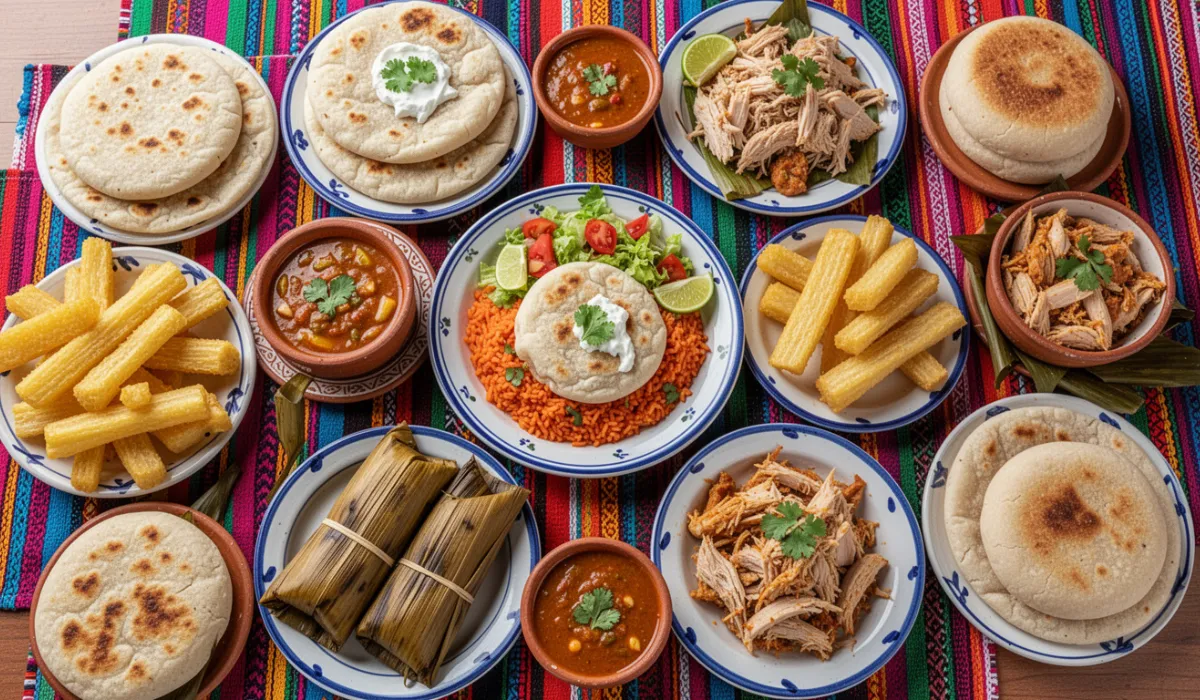
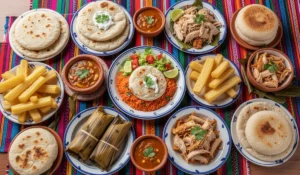
A pupusa is incomplete without its curtido (fermented cabbage and carrot slaw) and homemade tomato salsa.
👉 Make your food trip easier — Rent a car without a credit card in El Salvador
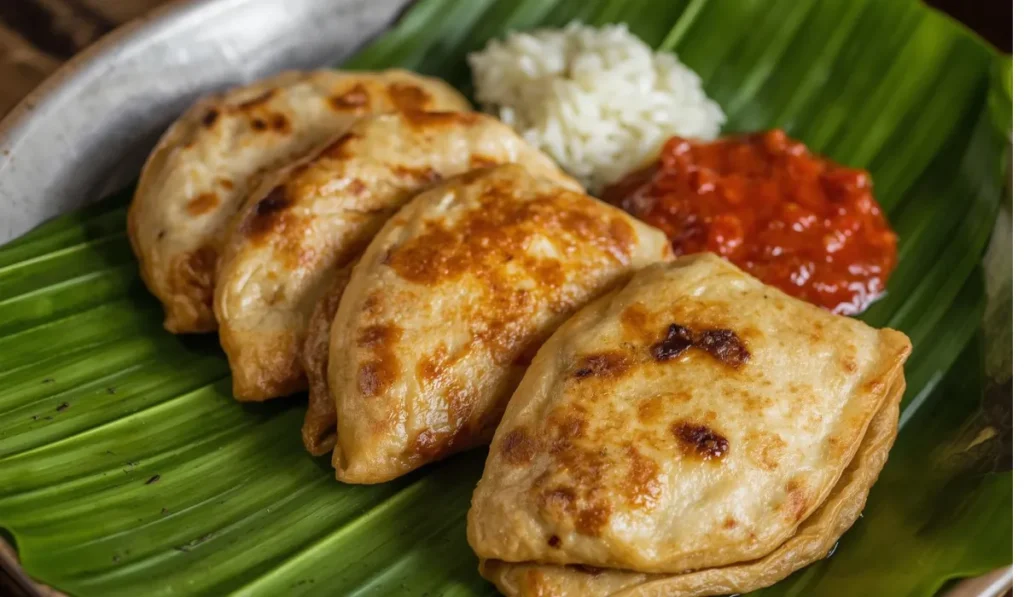
Cultural Significance of Pupusas 🇸🇻
The pupusa is more than a dish — it is an engine for micro-enterprise and entrepreneurship in El Salvador and its diaspora. Pupuserías, from modest street stalls to family restaurants, are a vital business for thousands of families.
This model has been replicated with great success in the Salvadoran diaspora, especially in the United States, Canada, and Spain. These establishments are not only prosperous businesses but also community and cultural centers that keep ties to the homeland alive.
Selling pupusas has relatively low barriers to entry and guaranteed high demand. For Salvadorans abroad, the pupusa represents home, identity, and resilience.
👉 Explore El Salvador’s rich gastronomic tourism — Discover traditional Salvadoran restaurants and gastronomic routes in El Salvador
Traditional Pupusas Recipe (Step by Step)
Follow this guide to achieve authentic pupusas, with well-sealed masa and perfectly integrated filling.
Preparing the Masa
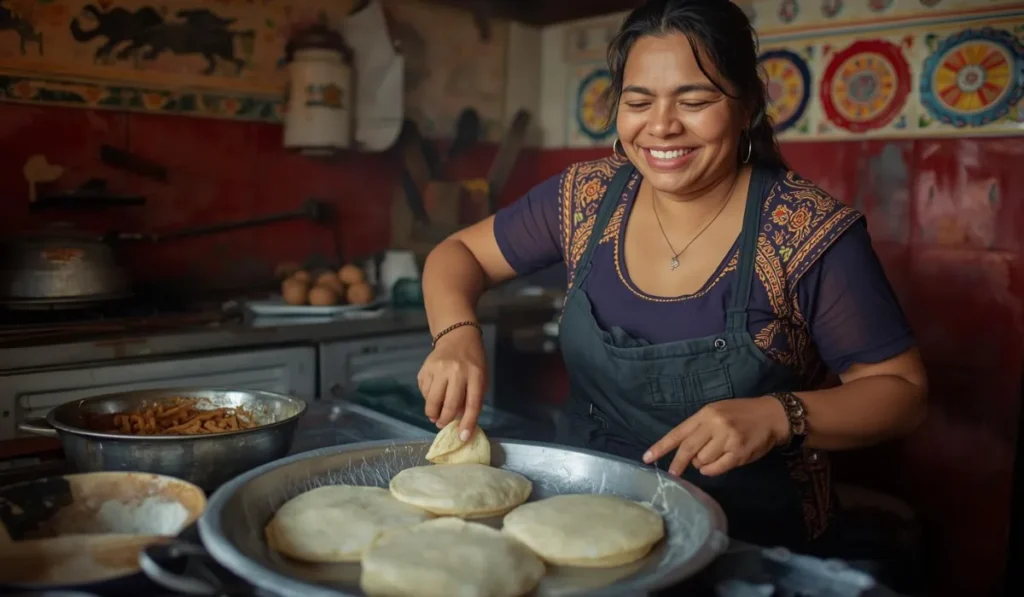
In a bowl, mix 2 cups of corn masa flour with 1½ cups of warm water and 1 teaspoon of salt. Knead by hand until you get a uniform, smooth consistency that doesn’t stick to your fingers, similar to playdough. Cover it and let it rest while you prepare the fillings.
Preparing and Handling the Filling
The fillings should be cold with a manageable texture:
- Cheese: crumbled
- Beans: well-refried and thick
- Chicharrón: finely ground
- For revuelta: mix equal portions of each
Technique for Forming and Sealing the Pupusa (Critical Step)
- Form a masa ball the size of a golf ball
- With your thumbs, make a deep cavity in the center, like a “bowl”
- Place 1 to 2 tablespoons of filling in the hollow
- Carefully close the masa, sealing the edges over the filling and reforming a smooth ball
- Flatten the ball between your palms with a circular motion, forming a disc about 4-5 inches (10-12 cm) in diameter
Cooking on the Comal (Griddle)
Heat a comal, griddle, or heavy skillet over medium-high heat. Lightly grease the surface of the pupusa with oil. Cook each pupusa for 2-3 minutes per side, or until well-browned with toasted spots and it puffs up slightly.
Traditional Accompaniments for Pupusas
Curtido Salvadoreño
It is not a simple salad — it’s a ferment. The key is to let it rest for at least 2-3 hours, ideally overnight, so it lightly ferments and develops its characteristic acidic and complex flavor that cuts through the fat of the pupusa.
Tomato Salsa
A simple but fundamental salsa. Blend ripe red tomatoes with onion, garlic, and salt, and cook over low heat until thickened.
Typical Beverages
To drink, the traditional choices are:
- Atol de elote (a warm drink made from fresh corn)
- Salvadoran horchata (made from morro seeds, cinnamon, and other ingredients)
Tips for Preparing Perfect Traditional Pupusas
| Problem | Solution |
|---|---|
| Masa cracks when flattened | Too dry → add water |
| Masa sticks to hands | Too wet → add more masa flour |
| Filling leaks out | Seal edges carefully; use cold filling |
| Pupusa too thick | Flatten confidently between palms |
| Pupusa doesn’t puff | Don’t press while cooking — let steam build |
Bonus tip: The masa should be as smooth as playdough. The griddle should be hot but not smoking — a drop of water should sizzle and evaporate on contact.
Differences Between Traditional and Modern Pupusas
| Feature | Traditional Pupusas | Modern / Fusion Versions |
|---|---|---|
| Size & Shape | Moderate size (4-5 inches), irregular handmade shape | Can be “giant” or “mini pupusas.” Presses used for uniformity |
| Ingredients | Classic fillings: cheese, beans, chicharrón, loroco, ayote | Global ingredients: chicken, spinach, mushrooms, jalapeño, pepperoni, shrimp |
| Masa | Exclusively nixtamalized corn or rice (Olocuilta) | Blue corn, whole grain, gluten-free options |
| Preparation Method | Kneaded, stuffed, and sealed completely by hand, one by one | Semi-industrial methods or presses |
| Context & Service | Street food, family-style, traditional pupusería. Served with curtido and salsa | Gourmet menus, food trucks, fusion restaurants. Sometimes served with cream or guacamole |
Traditional Pupusas as a Business Opportunity
The pupusa is, par excellence, an engine for micro-enterprise and entrepreneurship in El Salvador and its diaspora. Pupuserías, from modest street stalls to family restaurants, are a vital business for thousands of families.
For Salvadorans abroad interested in starting a food business, there are resources available:
👉 Businesses for Salvadorans abroad
👉 Tourism as an investment in El Salvador
👉 Car rental models for entrepreneurs
How Carvi Can Help Typical Food Businesses
Editor’s Note: This article was prepared with the support of Carvi. While Carvi is a leading platform in El Salvador specialized in car rentals, its commitment to supporting local ventures leads us to highlight the importance of digitalization for all types of small businesses, including pupuserías.
For a growing pupusería, digitizing certain processes can make a difference:
- Order Management: Centralizing orders from phone, social media, and delivery apps into a single tool prevents errors
- Digital Payments: Accepting cards and transfers, in addition to cash, expands customer options
- Sales and Inventory Control: Keeping clear records helps make informed decisions to increase profitability
Adopting simple technological solutions allows food businesses to automate administrative tasks, improve the customer experience, and focus more time and energy on what really matters: perfecting the traditional recipe and serving their patrons.
Gastronomic Tourism in El Salvador 🇸🇻
El Salvador offers incredible opportunities for food lovers. Combine your pupusa tour with visits to:
Tourist Destinations
👉 Complete guide to tourist places in El Salvador
👉 Tourist attractions in El Salvador
👉 Safe tourism in El Salvador
Nature and Adventure
👉 Lake Coatepeque in El Salvador
👉 Cerro Verde National Park
👉 Volcanic tourism in El Salvador — definitive guide
👉 Nature and bird tourism in El Salvador
The Flower Route (Ruta de las Flores)
👉 El Salvador’s Ruta de las Flores
👉 Towns on the Flower Route — travel guide
👉 Murals of Concepción de Ataco — open-air gallery
Beaches
👉 The best beaches to visit in El Salvador by car
👉 Beaches and hotels in El Salvador
👉 El Tunco vs El Sunzal — definitive beach guide
👉 Surf in El Salvador — complete guide for beginners
Colonial and Magical Towns
👉 Magical towns of El Salvador
👉 10 reasons to experience colonial tourism in Suchitoto
👉 Tourism in San Miguel — complete guide
👉 The 10 best tourist places in Santa Ana
Tours
Salvadoran Food Guide for Tourists
👉 Guide to traditional food for tourists visiting El Salvador
👉 Salvadoran road food
👉 Fruits from El Salvador
Best Restaurants and Cafes
👉 Top 10 restaurants in El Salvador — the foodie guide
👉 Best restaurants in El Salvador
👉 Family restaurants in El Salvador
👉 Best cafes in El Salvador
Gastronomic Tourism
👉 Gastronomic tourism in El Salvador
👉 Gastronomic routes in El Salvador
Frequently Asked Questions about Pupusas (FAQ)
What are traditional pupusas made of?
They are made from a dough of nixtamalized corn (special corn flour for tortillas), water, and salt. They are stuffed before cooking with ingredients like cheese, refried beans, or chicharrón, and are accompanied by curtido and tomato salsa.
What is the most popular pupusa?
The revuelta pupusa, which combines cheese, beans, and chicharrón in a single filling, is widely considered the most popular and in-demand.
Are traditional pupusas made from corn or rice?
The traditional and most common masa is corn. However, there is a very well-known traditional variant made with rice flour, originating from and typical of the town of Olocuilta.
How many calories does a traditional pupusa have?
The calorie content varies by filling. A cheese pupusa can have between 200-300 calories, while a revuelta or chicharrón pupusa can exceed 350-400 calories.
Where can I try authentic pupusas?
You can find authentic pupuserías throughout El Salvador, from San Salvador to small towns like Olocuilta. For the best experience, visit during National Pupusa Day (second Sunday of November).
Can I rent a car to go pupusa tasting?
Absolutely! Renting a car is the best way to explore El Salvador’s diverse pupusa regions.
👉 Rent a car in El Salvador without a deposit
👉 Theft insurance for car rentals in El Salvador
Conclusion
The traditional pupusa is a gastronomic treasure that encapsulates centuries of history, from pre-Columbian kitchens to modern vibrant pupusódromos. It is a dish that speaks of identity, resilience, and community.
Whether you dare to prepare them at home, respecting the artisanal hand-sealing technique, or seek out an authentic pupusería to support the entrepreneurs keeping this tradition alive, every bite is a celebration of Salvadoran culture.
A symbol of home that, thanks to its simplicity and deep flavor, has managed to conquer the world.
👉 Ready to explore pupusas in their origin country? Rent your car now and start your Salvadoran food adventure today! 🇸🇻🌮
Share this content:
Post Comment